
Metro Manila (CNN Philippines, May 4) — The United States and the Philippines have adopted new bilateral defense guidelines during President Ferdinand Marcos Jr.’s official visit to Washington D.C.
Marcos on Wednesday was accorded full honors upon his arrival at the Pentagon, the headquarters of the US Department of Defense (DOD). He met with US Defense Secretary Lloyd Austin, where they reaffirmed their “ironclad alliance” commitments to the 1951 Mutual Defense Treaty.
According to US DOD, Austin and his Philippine counterpart Carlito Galvez have established the bilateral defense guidelines that institutionalized key priorities to deepen cooperation and interoperability across land, sea, air, space, and cyberspace.
Pentagon said the guidelines also modernized alliance cooperation in support of the US and the Philippines’ shared vision for a free and open Indo-Pacific region.
“The guidelines reaffirm that an armed attack in the Pacific, including anywhere in the South China Sea, on either of their public vessels, aircraft, or armed forces – which includes their Coast Guards – would invoke mutual defense commitments under Articles IV and V of the 1951 U.S.-Philippines Mutual Defense Treaty,” it said.
The following goals serve as the foundation for the guidelines:
– Reaffirm the 1951 Mutual Defense Treaty’s continued relevance in addressing current and emerging threats;
– Foster a common understanding of roles, missions, and capabilities within the framework of the alliance to face emerging regional and global security challenges;
– Drive unity of effort across shared dialogue mechanisms and working groups and ensure all areas of bilateral security and defense cooperation are coordinated to address primary security concerns; and
– Guide priority areas of defense cooperation to address both conventional and non-conventional security challenges of shared concern to the United States and the Philippines.
The guidelines also outlined paths of efforts to achieve such goals, including:
– Modernize defense capabilities through close coordination on the Philippines’ defense modernization, and prioritize the procurement of interoperable defense platforms sourced from the US
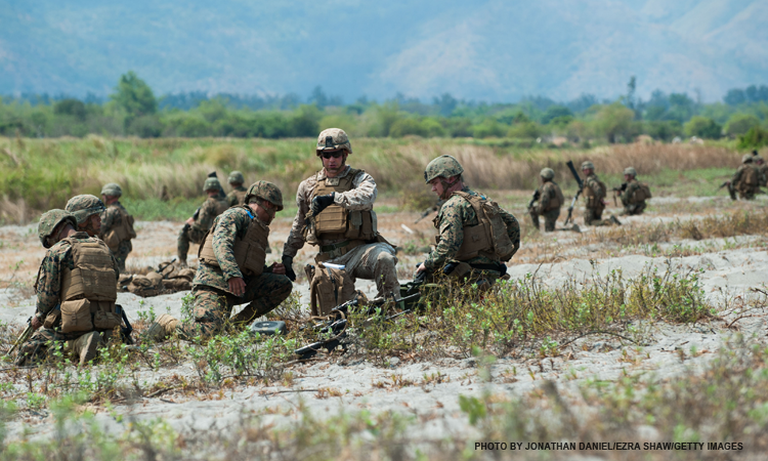
– Deepen interoperability through bilateral exercises, maritime security awareness, and cooperation under the Enhanced Defense Cooperation Agreement
– Enhance bilateral planning and information-sharing through coordinated analysis and tabletop exercises, enhancement of information security
– Combat transnational and non-conventional threats through improving cyber defense and cyber security cooperation, and other capacity-building activities to respond to chemical, biological, and nuclear-related attacks
– Contribute to global and regional peace and security