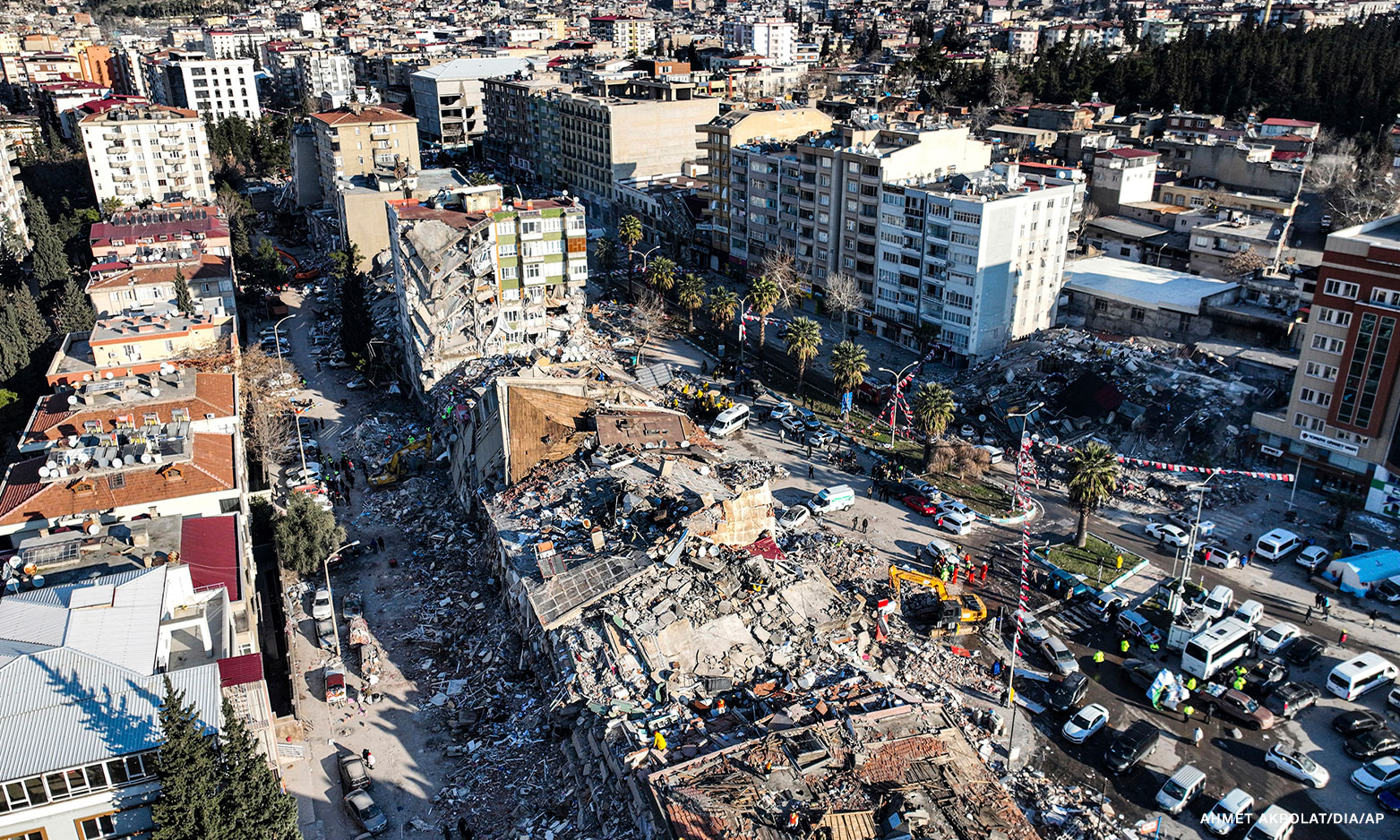

Metro Manila (CNN Philippines, February 10) — An expert has explained how the magnitude 7.8 earthquake that struck Türkiye (formerly Turkey) and Syria on Monday occurred.
Speaking to CNN Philippines’ The Source on Friday, University of the Philippines Resilience Institute Executive Director Mahar Lagmay said the recent tremor hit Türkiye and Syria because their location is where large plates, even bigger than Africa and Asia, collide.
This builds up energy, which will be released in the form of an earthquake, he said.
“From time to time, the energy that is released is so far powerful, so big that especially when it is near the surface and near a populated area, it can create such great devastation,” Lagmay explained.
He said aftershocks are expected in the same region where Monday’s quake occurred.
“Since the earth is still moving and it’s constantly moving, it’s dynamic, all of these plates will continue to collide with each other and continue to build energy,” Lagmay said. Eventually, that energy will be released, and an earthquake will happen somewhere in Turkiye in the future.”
The expert warned that this is not the only place where such natural events transpire.
In the Pacific Ring of Fire, where the Philippines is located, this powerful tremor — as well as volcanic eruptions — may also happen, he said.
Lagmay said a fault — a fracture or zone of fractures between two blocks of rock — in the Philippines is likely to cause a destructive earthquake.
He identified it as the West Valley Fault.
According to the Philippine Institute of Volcanology and Seismology, this 100 kilometer-fault traverses the cities of Metro Manila, namely Taguig, Muntinlupa, Paranaque, Quezon City, Pasig, Makati, and Marikina, as well as nearby provinces of Rizal, Laguna, Cavite, and Bulacan.
This moves every 200 to 400 years. The last time was in 1658, it noted.
Lagmay said quakes themselves do not kill. Casualties happen because of the hazards caused by the natural disaster, like tsunamis, landslides, ground rupture, and destruction of structures, he pointed out.
To lessen its effect, especially on the lives of people, Lagmay reminded the public to familiarize themselves on their area’s hazard map, have an evacuation plan, and follow the country’s building code when creating structures or houses, among other things.