
Metro Manila (CNN Philippines, November 17) — Former Bayan Muna Rep. Satur Ocampo on Thursday urged the government to be cautious in “identifying and approving” additional locations under the Enhanced Defense Cooperation Agreement (EDCA) with the United States.
“The government must first monitor how the US utilizes its facilities, assess how these comply with the EDCA and impacts on Philippine sovereignty and independence, and on our people’s security and welfare before deciding to designate and approve additional locations,” Ocampo said in a statement.
US Vice President Kamala Harris is set to visit the country on Nov. 21 to discuss security partnership and economic ties between the two countries, and issues regarding the South China Sea.
RELATED: US VP Harris to meet with Marcos, Duterte during PH visit
Ocampo said Harris’ visit will “most likely seal the deal for the additional sites” of EDCA, which will “make the Philippines as a big military launching pad for the US,” Ocampo said.
Two of the target sites will be built in Cagayan and one each in Palawan, Zambales and Isabela, according to Armed Forces of the Philippines chief Lt. Gen. Bartolome Vicente Bacarro.
There are currently five EDCA sites in the country: the Cesar Basa Air Base in Pampanga, Fort Magsaysay in Nueva Ecija, Lumbia Air Base in Cagayan de Oro, Benito Ebuen Air Base in Cebu and the Antonio Bautista Air Base in Palawan.
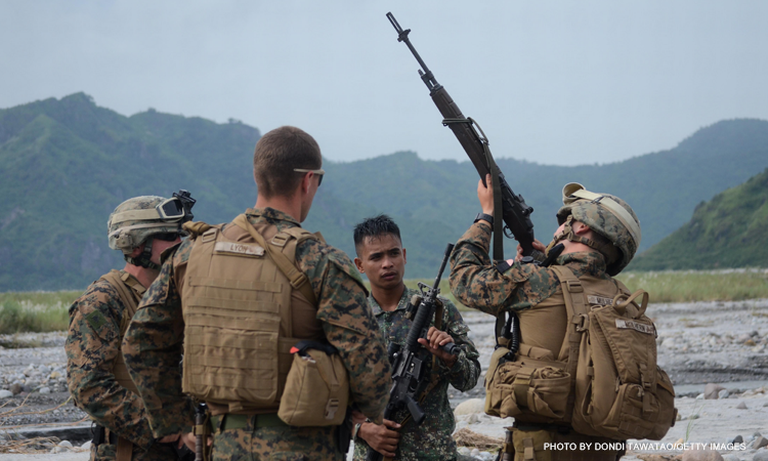
Ocampo said although the EDCA sites will not be used as military bases, it will be used to store military equipment and ammunition, and the additional facilities pose a threat to potential missile attacks by China should the situation with the US escalate.
“Filipinos are also barred from entering these US facilities. So, in effect they are de facto military bases,” said Ocampo.
EDCA was established as part of the Indo-Pacific Strategy of the United States for the Pacific Islands.