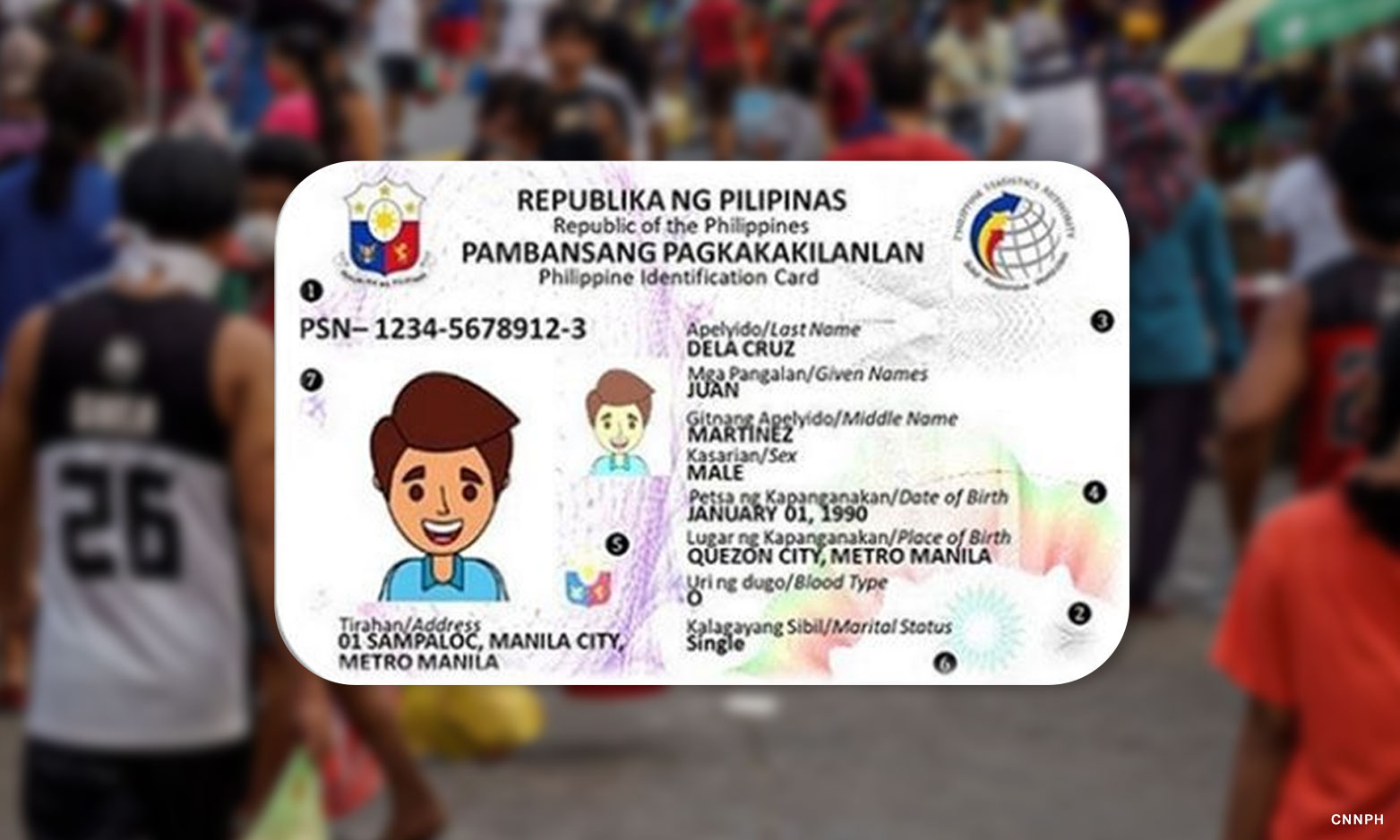

Metro Manila (CNN Philippines, October 13) — House Deputy Minority Leader Bernadette Herrera criticized the Philippine Statistics Authority (PSA) for the delays in the printing and distribution of the national identification (ID) and reports of faded cards after just a few months.
“It’s unacceptable kasi [because] since 2019 a lot of people have (had) data captured already but up to now… only a small number of cards (has) been distributed and unfortunately with the number of cards distributed after three months, the reports are, it has faded already, so that’s screaming of inefficiency,” the BH party-list representative told CNN Philippines’ The Source.
Herrera is calling for a congressional hearing to look into the “inefficient, delayed, and faulty” distribution of the national ID. Citing government data, she said only around 20 million of more than 70 million registered Filipinos have received their IDs.
“If the national ID is delayed, a lot of Filipinos get disenfranchised because a lot do not have IDs… It’s supposed to be a national ID, iyan na lahat [it already everything] except for the driver’s license,” she said.
CNN Philippines has yet to receive a response from PSA when asked about the matter.
Earlier, the agency said it aims to issue 50 million IDs by the end of the year, 30 million of which are physical ID, while the rest are digital. By June 2023, the agency projects to have distributed 92 million national IDs in physical, printable, and digital forms.
Herrera also pushed to include a person’s signature on the national ID. This, after she received reports that banks do not accept the ID since it does not physically show the signature of the owner.
Under Republic Act 11055, or the Philippine Identification System Act, the national ID shall be accepted for government and private transactions and shall be considered sufficient proof of identity for all holders.
The PSA has also called on government agencies and private financial institutions to accept this identification since it has “powerful authentication” features in the absence of the registrant’s handwritten signature on the physical card.