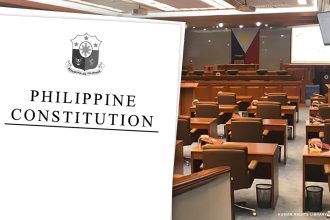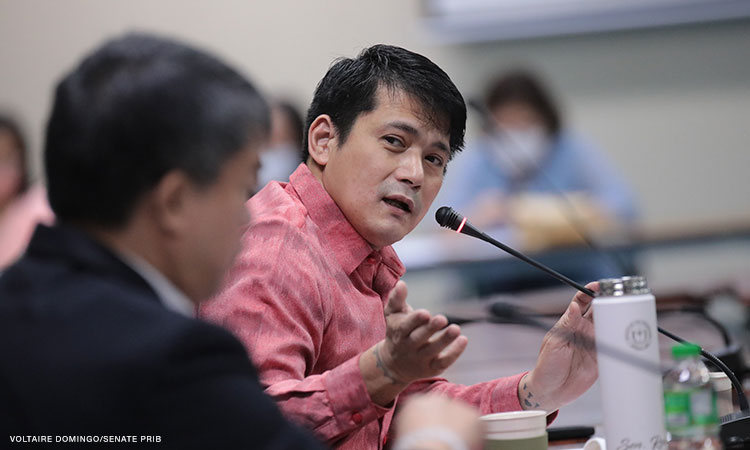

Metro Manila (CNN Philippines, September 2) — Senate committee on constitutional amendments chairman Robin Padilla hopes to bring charter change talks to the provinces and come up with a panel report all within the remaining four months of the year.
In a media interview on Friday, Padilla disclosed his plan to consult local government officials and indigenous groups about proposals to amend the Constitution. He said he will start with the Cordillera Administrative Region, followed by Cebu, Davao, Cagayan de Oro, and General Santos City.
Padilla said he wanted to do it soon but the priority for the coming months is to pass the 2023 national budget.
“Siguro tatapusin lang itong hearing ng budget… walang tulugan ito. Pagkatapos niyan lalabas na po kami, pupunta na po kami sa mga probinsya,” Padilla said.
[Translation: I think we will just finish the budget hearings. We’re not going to sleep. After that, we will go to the provinces.]
Asked if he also targets to finish the committee report by yearend, Padilla said, “Inshallah (If Allah wills it).”
“Ayoko itong patagalin sa usapin ng taon. Naku, huwag kasi pagbibintangan tayo, sasabihin nila term extension,” he added.
[Translation: I don’t want to drag this for years or else we’ll be accused of seeking term extension.]
During the third committee hearing on Friday, Padilla lamented the absence of some Cabinet secretaries. He expressed his frustration by saying this wouldn’t have happened under a parliamentary form of government.
A parliament holds both legislative and executive powers, with members chosen by electoral districts.
Padilla gained an ally in National Security Adviser and retired political science professor Clarita Carlos. She believes a parliamentary system would also put an end to the reign of political dynasties in the country.
“There will be no notion of term limits. If you’re elected as a member of parliament, you can be elected for as long as you are allowed,” she said.
“No term limits, no political dynasties,” she added.
Senate Minority Leader Aquilino “Koko” Pimentel III said like federalism, a shift to parliamentary would streamline government services.
However, economist Solita “Winnie” Monsod pointed out that only two countries have changed their form of government from 1962 to 1998, and that both Cyprus and Sri Lanka shifted from parliamentary to presidential.
Studies also show no difference between the two in reducing corruption and ensuring the survival of democracies, Monsod said, while higher government spending is seen with a parliamentary form of government with no significant impact on the economy.
Padilla also seeks to repeal the 60-40 foreign ownership limit in the Constitution, but Monsod said it’s not necessary and won’t guarantee more investments.
“If the purpose of the revision of the Constitution is to attract foreign investment, it’s not going to happen. It’s not sufficient, you see,” Monsod said.
The Senate is tackling two resolutions — one filed by Padilla, which directed the committee to review the 1987 Constitution for possible revisions, and other from Senator Sherwin Gatchalian which seeks changes to economic provisions alone.