
Metro Manila (CNN Philippines, September 1) — The Department of Education (DepEd) has released its updated guidelines on the suspension of classes and work in schools during natural disasters and calamities.
When are classes automatically canceled?
According to DepEd, in-person and online classes in all levels are automatically canceled in the following scenarios:
Typhoons
Automatic cancellation of classes in all levels applies in local government units (LGUs) where Tropical Cyclone Wind Signal (TCWS) No. 1, 2, 3, 4, or 5 has been raised by the weather bureau Philippine Atmospheric, Geophysical and Astronomical Services Administration (PAGASA).
This is different from the guidelines released last year which only required class suspension for public and private kindergarten classes if the TCWS is at the lowest level 1.
If there are strong winds that are not due to a typhoon, the department said LGUs shall decide on the cancellation or suspension of classes.
Heavy rainfall
Automatic cancellation applies in areas where PAGASA issued a yellow, orange, or red rainfall warning.
LGUs where no heavy rainfall alert has been raised may still decide on the cancellation or suspension of classes if there are areas experiencing torrential rains.
Floods
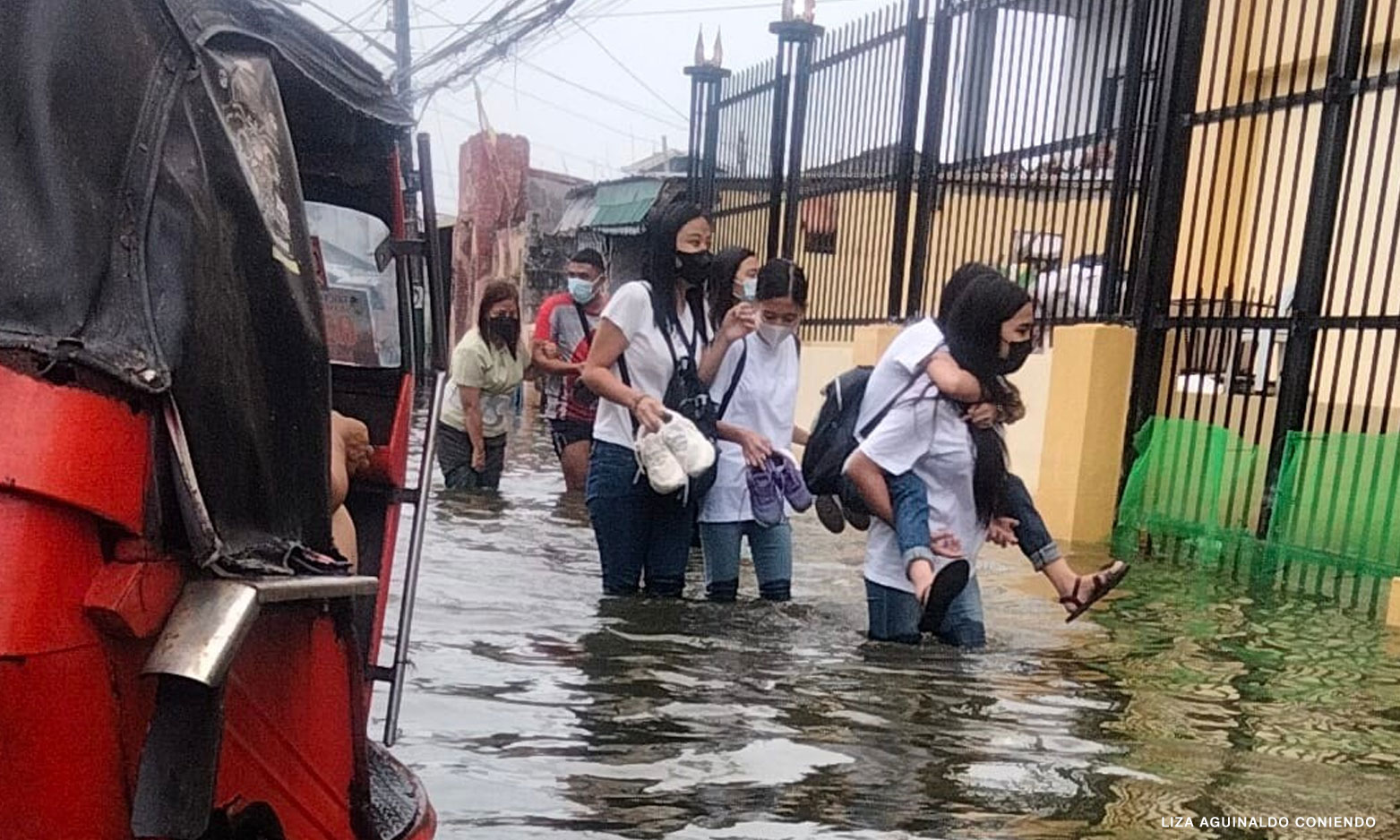
Automatic cancellation applies in areas where the weather bureau issued a flood warning.
LGUs are also authorized to suspend classes in specific or all areas if there is flooding, even without the warning from PAGASA.
Earthquakes
Automatic cancellation applies in areas where an earthquake with intensity 5 and above has been declared by the Philippine Institute of Volcanology and Seismology (Phivolcs).
The intensity scale is different from the reported magnitude of an earthquake. According to Phivolcs, intensity 5 means “strong” shaking. The highest intensity is 10, which means the quake was “completely devastating.”
For earthquakes with intensity 4 or below, LGUs shall decide on the cancellation or suspension of classes. DepEd added that school principals may also make this decision at any intensity scale if they assess that a building or any other structure may collapse or was found to have major damage.
When are teachers, DepEd employees required to work?
The department said that in the aforementioned events, employees in schools and its offices are not required to work, “except those who are mandated to render security, safety, finance, engineering, sanitation, health, and disaster response duties.”
DepEd offices and schools must also activate their respective disaster risk reduction and management (DRRM) teams. Members of the team are mandated to work in the aftermath of the disaster for response, early recovery, and reporting duties.
“Officials of private schools shall exercise discretion relative to the work arrangement of their DRRM personnel,” the department said.
What kind of facilities can schools be converted to?
Schools may not be used as quarantine, isolation, or vaccination sites, according to the guidelines.
This effectively revokes the authority earlier given to regional directors in allowing schools to be designated as such facilities.
“In cases of other disasters, schools may be used as an immediate evacuation site which should not last for more than fifteen days. LGUs should not use schools as long-term shelters for evacuees,” the department said.
What else did the guidelines state?
DepEd said that if classes already began at the time the warning — such as the TCWS, rainfall, or typhoon alert — was issued, schools must immediately suspend classes and work.
However, it stressed that students and personnel must be safely kept inside school premises if traveling has become unsafe.
It added that distance learning or make-up classes must be implemented “to ensure that learning competencies and objectives are still met.” Students who miss learning activities due to natural disasters and calamities must also be accorded due consideration.
Meanwhile, DepEd said parents or guardians are ultimately responsible for determining whether their children should attend classes, in consideration of their physical and/or mental health during such events.
DepEd said the rules — which were posted on its website on Thursday — cover students and employees in public schools, as well as all personnel in its central, regional, and division offices.
Meanwhile, adherence is optional for private schools, community learning centers, and state or local universities and colleges.
“In times of disasters and calamities, safeguarding the learners and personnel from unnecessary physical dangers that they may be exposed to, and protecting their constitutional rights to life, health, safety, and property, remain to be the department’s paramount consideration,” the guidelines read.
The department clarified on Friday, however, that the guidelines are not yet in effect since a copy would still have to be filed in the Office of the National Administrative Register of the University of the Philippines Law Center.
DepEd said it would take down for now the document uploaded on its website to avoid confusion.
CNN Philippines breaks down what you need to know about class and work suspension in schools once the guidelines take effect.