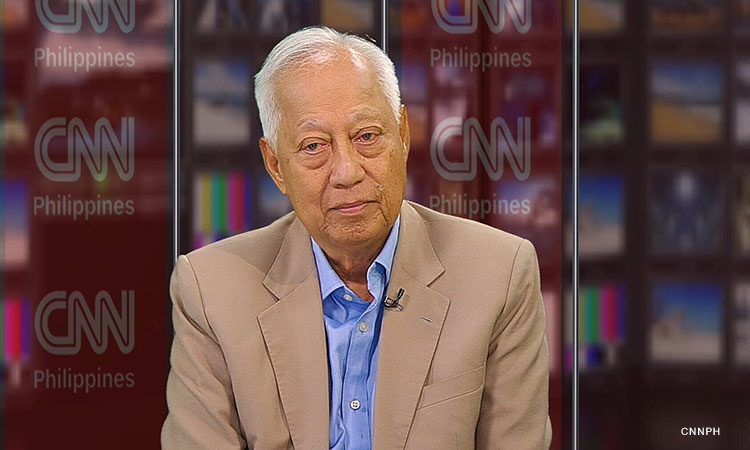

Metro Manila (CNN Philippines, August 25) — Amid fresh talks on federalism and calls to change the 1987 Constitution, one of its framers called for an approach that looks into inequalities, mass poverty, and abuse of power which all largely contribute to the societal ills plaguing the country today.
During the first deliberation of the Senate Committee on Constitutional Amendments and Revision of Codes on Thursday chaired by Sen. Robin Padilla, lawyer Christian Monsod said that he finds it illogical to pin the blame for the Philippines’ problems on the Constitution, when the government failed to implement its provisions on social justice, human rights, and local autonomy — which he had described as the three central themes of the charter.
Monsod, a former chairman of the Commission on Elections, clarified that while he is not completely against amending the charter, he believes it is not the problem. In fact, it is part of the solution, he said.
“The inspiration of the 1987 Constitution was EDSA,” Monsod said. “But EDSA was more than the restoration of democracy through peaceful means, it was also the promise, especially to the poor, of a new social order with radical changes because our present social order is rooted in a feudalistic system of political dynasties that has been impervious to change for generations.”
Monsod also recommended a bottom-up approach, which would prioritize the poor and challenge a system that has long been benefitting the ones in power — the very ones who are in charge of crafting the country’s laws and policies.
He cited as an example the proposal to postpone the barangay and Sangguniang Kabataan (SK) elections to 2023, which would essentially grant barangay officials over seven years in power, when their term was supposed to last for only three years.
“Is that a problem of structure? It’s a problem of people postponing the elections, and now, they want to postpone again,” Monsod said. “It’s a political move. People abuse the power of appointment. We see that all the time.”
“You don’t start at the top with a big bang theory,” he continued. “You start at the bottom, the barangay. The barangay is quasi-judicial, quasi-executive, quasi-legislative. The poor should control the barangays. Give them the power at the barangay level para maalis yung mga (to get rid of all) dynasties.”
“In the next three years, control the municipalities, in another three years, control the provinces…then, the national elections,” he said. “It’s a long-distance run of commitment and endurance. Until we get a new generation of leaders who come from the poor, there will be no real change in this country.”
Ding Generoso, a spokesperson of the consultative committee formed by former President Rodrigo Duterte to amend the Constitution, argued, however, that it might still require necessary constitutional changes to fix society’s problems.
He added that it might even take “the second coming of Jesus Christ” to wait for such organic change that Monsod was referring to.
The Senate panel under Padilla will resume the meeting on the matter on Friday.
In the House of Representatives, the Committee on Suffrage and Electoral Reforms, during its second meeting on Thursday, approved a substitute bill that would postpone the barangay and SK polls from December 2022 to December 2023. The proposal will still be subject to the plenary’s approval.