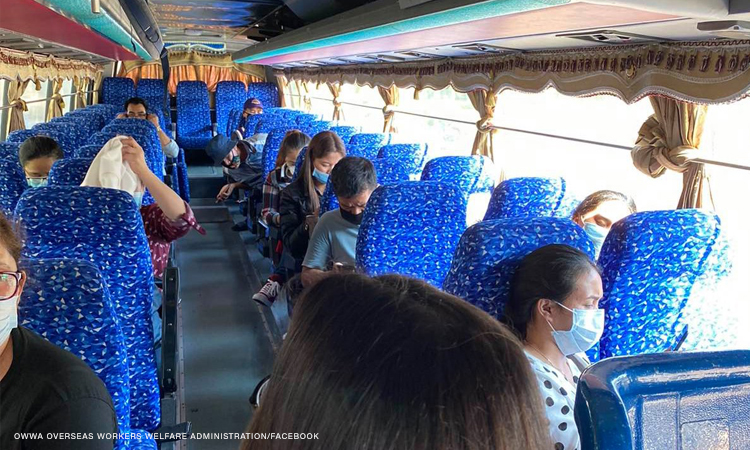

Metro Manila (CNN Philippines, July 14) — The Commission on Audit (COA) has commended the Overseas Workers Welfare Administration (OWWA) for utilizing the ₱17.3 billion Emergency Repatriation Fund (ERF) for Filipino migrant workers during the COVID-19 pandemic and for “giving its best” in providing services despite the limited budget.
“Out of the ₱17,367,559,655.88 total funds received by the OWWA for Emergency Repatriation Fund, ₱17,367,559,406.09 or 99.9999986 percent was utilized for accommodation, transportation, financial assistance, and other COVID-19 incidental expenses of the repatriated OFWs,” the 2021 audit report reads.
The COA also reported that over ₱13.322 billion of the total earmarked funds for the ERF were spent for hotel accommodation.
About ₱3.562 billion were allocated for transportation expenses, while ₱449.5 million went to food expenditures.
The OWWA also spent ₱15.087 million for cremation/funeral services, ₱9.78 million for subsidies, ₱5.49 million for supplies, ₱2.4 million for hospitalization/drugs and medicine, and ₱90,200 for other maintenance and other operating expenditures.
State auditors also noted that out of the ₱17,367,559,406.09 obligated amount, OWWA paid ₱2.25 billion for the expenses incurred in 2020 which are not part of the budget that year.
The OWWA will also pay approximately ₱5.035 billion worth of unobligated expenses made in 2021 from the agency’s 2022 budget, upon availability of funds from the Department of Budget and Management.
“We commended the efforts and services of the OWWA Officers and employees headed by its Administrator in responding to the needs of repatriated/displaced OFWs due to the COVID-19 pandemic,” state auditors said.
During the Laging Handa briefing last March 18, OWWA Deputy Administrator for Administration and Fund Management Arnell Ignacio said the agency spent ₱23.05 billion in repatriating OFWs since the start of the COVID-19 pandemic in 2020.