
Metro Manila (CNN Philippines, June 17) – Photos and messages obtained by private persons from a Facebook Messenger account can now be used as court evidence.
The Supreme Court (SC) made the ruling as it upheld the Court of Appeals decision to convict Christian Cadajas for violating Republic Act 9775 or the Anti-Child Pornography Act.
In a decision penned by Associate Justice Jhosep Lopez last November 16 and made public on Friday, the top court denied Cadajas’ plea that his Facebook Messenger chat messages with a female minor not be presented as evidence in court since it violated his right to privacy.
The court said In 2016, Cadajas, then 24 years old, started a romantic relationship with a14-year old girl whom he coaxed into sending photos of her private parts in their Facebook Messenger chat thread.
The mother of the female minor discovered her daughter’s conversation with Cadajas and forced her to open the petitioner’s Facebook Messenger account to obtain a copy of their messages. The girl earlier deleted the messages on her account.
The court ruled that Cadajas’ right to privacy was not violated since he gave his Facebook Messenger account password to the female minor.
“When he (Cadajas) gave his Facebook Messenger password to AAA (female minor), he made its contents available to AAA, and the latter would then have the latitude to show to other persons what she could access, whether she be forced to do so or not,” the Supreme Court said in its ruling.
The decision also reads, “the availability of accessing these photos limited the scope of his (Cadajas) right to privacy, especially that these became essential in pursuing AAA’s (female minor) claims to protect her rights.”
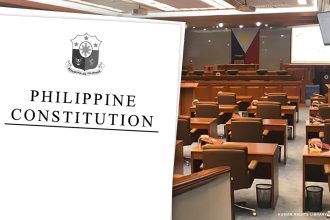
The court added the Facebook Messenger chat between Cadajas and the girl were not obtained by police or other State officers, so the Bill of Rights enshrined in the 1987 Philippine Constitution is not applicable to his case.
The Data Privacy Act or Republic Act 10173 is also not a valid legal ground invoked by Cadajas in his appeal before the Supreme Court since that law allows the processing of personal information if it will be used to determine a criminal liability.
In 2001, the SC promulgated A.M. No. 01-7-01-SC or the Rules on Electronic Evidence which provided guidance on electronic documents being used as evidence in court.
The Rules on Electronic Evidence did not explicitly state that social media messages and photos can be used as court evidence. But audio, photographic, and video evidence of criminal acts are allowed to be presented as case evidence provided it will be shown in the court and will be “identified, explained, or authenticated” by the person who made the recording.