
Metro Manila (CNN Philippines, April 14) — The Department of Health (DOH) on Thursday warned of a possible spike in COVID-19 cases in the middle of May if Filipinos continue to disregard health protocols, saying it could surpass the infections recorded during the Omicron variant surge in January.
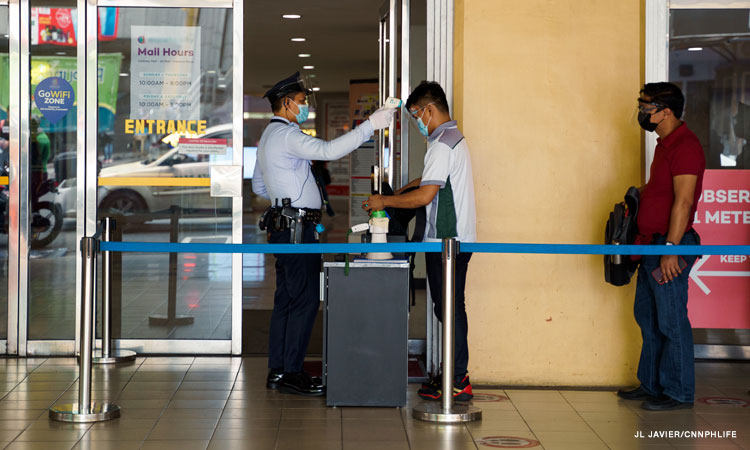
The compliance to minimum public health standards (MPHS), such as social distancing and proper wearing of face masks, declined by 12% in Metro Manila and 7% nationwide in March and April, according to the sub-Technical Working Group on Data Analytics (sTWG DA) and the Feasibility Analysis of Syndromic Surveillance using Spatio-temporal Epidemiological Modeler for Early Detection of Diseases (FASSSTER) Team.
Based on the disease models, a 20% decrease in MPHS compliance at the national level could lead to around 34,788 active cases with over 564 of these as severe and 267 as critical in mid-May; while a 30% decrease in MPHS compliance might bring the cases up further to as high as 300,000 over the same time period.
Meanwhile, Metro Manila alone could have 25,000 to 60,000 daily new cases — triple the number of active cases during the Omicron wave — if there is a 50% decrease in MPHS compliance.
The DOH also cited a model from the Australian Tuberculosis Modelling Network (AuTuMN) Team that estimates that the introduction of a new variant that is two times more transmissible than Omicron with the ability to escape immunity could lead to a peak in ICU admissions in Metro Manila of around 2,418 cases in mid-May.
Despite the grim projections, the DOH said this is not cast in stone and it can be prevented if Filipinos wear proper fitting masks, isolate when they have flu-like symptoms, complete their COVID-19 shots and booster dose, and stay in well-ventilated areas.
“Numbers do not lie,” Health spokesperson Maria Rosario Vergeire said in a statement.
“The good news is, at this point, these are all still projections,” she pointed out. “We can still avert these estimates in favor of better scenarios. We can all do our part to help stop transmission and mutation of the virus.”