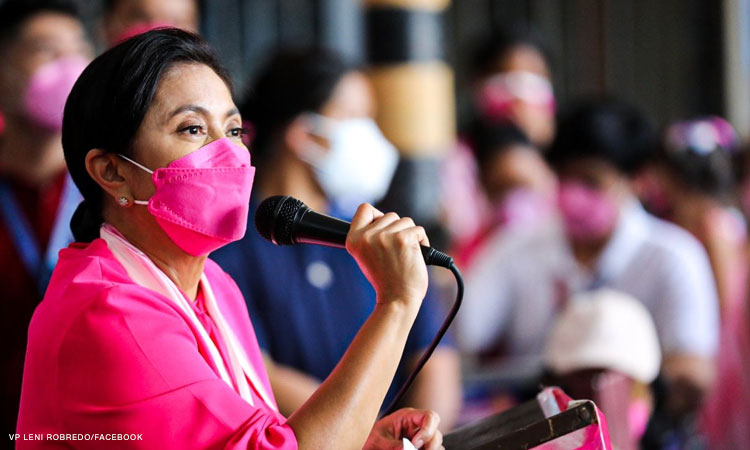

Metro Manila (CNN Philippines, March 2) – Presidential candidate Vice President Leni Robredo made it clear in a Catholic forum that her pro-LGBTQIA+ stand on civil unions is absolute.
“Sang-ayon ako sa sinabi ni Pope Francis na lahat tayo anak ng Diyos. I am all for civil unions like he is. Dahil ang paniniwala natin may karapatan lumigaya kahit sino at hindi dapat sila parusahan for the choices that they make,” Robredo said in Catholic E-Forum on Wednesday.
(I agree with what Pope Francis said that we’re all God’s children. I am all for civil unions like he is. We believe that every person has the right to be happy and they should not be punished for the choices they make.)
In his trip to Slovakia in 2021, Pope Francis said that same-sex civil unions are “good and helpful to many people,” adding that he “supported civil laws that try to help those who have a diverse sexual orientation.”
Robredo said it is the obligation of the government to make sure that members of the LGBTQIA+ are not being discriminated upon and all opportunities are there for them.
“Hindi dapat pinagkakaitan ang karapatan ang kahit sinong tao dahil lang kung sino ang mahal nila. I take offense na yung marami, ginagamit ang kanilang faith para i-look down yung mga tao na iba yung mga desisyon. It is something very personal to me,” she pointed out.
(A person should not be denied any right just because of who they love. I take offense when many use their faith to look down on people who made different decisions. It is something very personal to me.)
Divorce, abortion, death penalty
Robredo reiterated that she’s against divorce, abortion, and the death penalty. But she clarified she won’t impose her beliefs, and if she becomes president, she would listen to all views.
“Kahit kontra ako sa divorce, kontra sa abortion, kontra sa death penalty, obligasyon ko na siguruhin na yung divergent voices pinapakinggan. That is not to say magpapa-impluwensya ako,” she explained.
(Even if I’m against divorce, against abortion, against the death penalty, it’s my obligation to make sure that divergent voices are heard. That is not to say I will be influenced.)
Citing her experience as a lawyer for women who have been victims of domestic abuse, she said there are enough laws to protect them.
“Ang mahirap lang sa mga batas na ito ay hindi masyadong accessible sa mga mahihirap. So dapat ang gawin lang natin, make sure yung remedies under Family Code and other special laws will be accessible even to women who are victims of domestic abuse na walang perang pambayad,” she explained.
(What’s difficult with these laws, though, they’re not that accessible to the poor. So, we should make sure that remedies under the Family Code and other special laws will be accessible even to women who are victims of domestic abuse who don’t have the means to pay.)