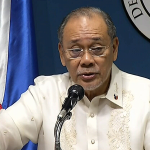

“We will commit to exit when we begin to actually see, based on our assessment, evidence of a sustainable recovery or end of increasing risks to inflation. The extraordinary measures can be gradually withdrawn when it appears that actual output growth is poised to already be above its potential level and inflation will rise above its target on a sustained basis,” Diokno said when asked about BSP’s exit plan.
“We will continue to aim for a balance between providing adequate stimulus to fuel the momentum of the economic recovery while preventing the buildup of inflationary pressures…,” he added.
Reacting to BSP’s decision, Capital Economics senior Asia economist Gareth Leather said in a statement it “came as no surprise”.
“The central bank in the Philippines (BSP) left interest rates on hold today and we doubt it will be in any hurry to tighten policy given the weakness of inflation and the slow economic recovery,” he said. “Given the outlook for inflation and growth as well as today’s dovish comments from the BSP, we think the policy rate will be kept at 2.00% throughout 2022.”
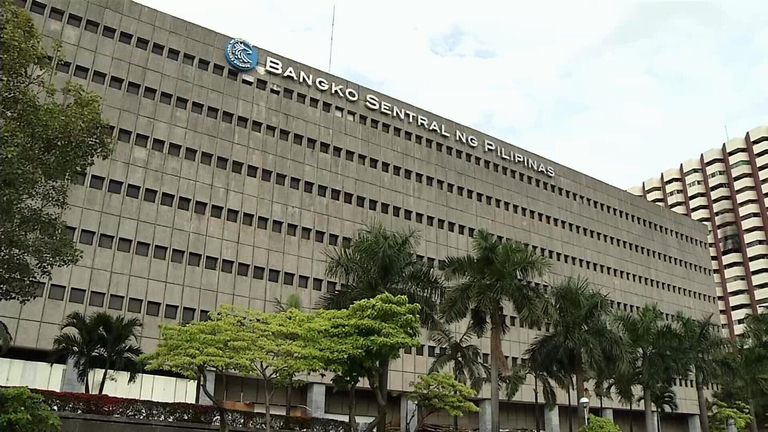
Metro Manila (CNN Philippines, February 17) — The Bangko Sentral ng Pilipinas kept interest rates on hold this February as it continues to help boost economic recovery by encouraging more lending.
The Monetary Board decided to retain policy rates at an all-time low of 2% in its first meeting for 2022, announced BSP Governor Benjamin Diokno on Thursday. This is the ninth straight meeting that rates were untouched since the surprise cut in November 2020.
The board also retained overnight deposit and lending rates at 1.5% and 2.5%, respectively.
The BSP’s rates serve as a benchmark for pricing loans, credit cards, and deposit rates for banks and lending firms.
Diokno earlier assured that the central bank is keen on maintaining its policy support in the hopes of sustaining the economy’s rebound.
Full-year growth hit 5.6% in 2021, inching past the economic team’s adjusted 5-5.5% target band after a quicker-than-expected 7.7% expansion from October to December.
Inflation forecast higher in 2022-2023
While the BSP maintained interest rates anew this February, it has increased its inflation forecast for this year and 2023 due to oil price hikes.
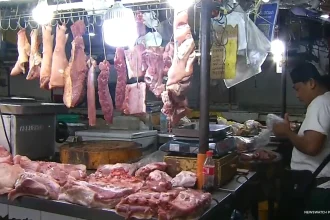
Inflation is expected to stay on the upside amid successive increases in oil prices, coupled with pork and fish shortages, Diokno said.
READ: Oil prices up on seventh straight week
“The inflation projections have slightly increased from the previous monetary policy meeting, reflecting the impact of higher domestic food inflation and global oil prices. Inflation expectations have likewise risen marginally but continue to be anchored within the target band,” he said during a virtual briefing.
“The risks to the inflation outlook continue to lean slightly towards the upside for 2022 but remain broadly balanced for 2023,” the BSP chief added.
The Monetary Board now expects inflation at a faster rate of 3.7% this year against its initial outlook of 3.4%. It also changed its outlook for 2023 from 3.2% to 3.3%.
Last month, inflation eased to 3% with household utilities and restaurant services leading the milder increase.
“Meanwhile, downside risks still emanate from the lingering threat of COVID-19 infections owing to possible case resurgence from new variants, as delays in the easing of containment protocols could temper domestic growth prospects,” Diokno said.
The BSP also said the tighterer restrictions imposed amid the Omicron surge in January may have an impact on the first-quarter economic growth.
Deadly Typhoon Odette may also affect the country’s economic output following its scale of devastation in the Visayas and Mindanao, wiping out over ₱13 billion in the agriculture sector alone.
“On balance, the Monetary Board deems it prudent to maintain the BSP’s accommodative policy stance given a manageable inflation environment and emerging uncertainty surrounding domestic and global growth prospects,” Diokno said.
“Looking ahead, given the stronger signs of recovery in output growth and labor market conditions and improvements in domestic financial markets, the BSP will continue to carefully develop its plans for the eventual normalization of its extraordinary liquidity measures when conditions warrant, in keeping with our price and financial stability mandates,” he said.