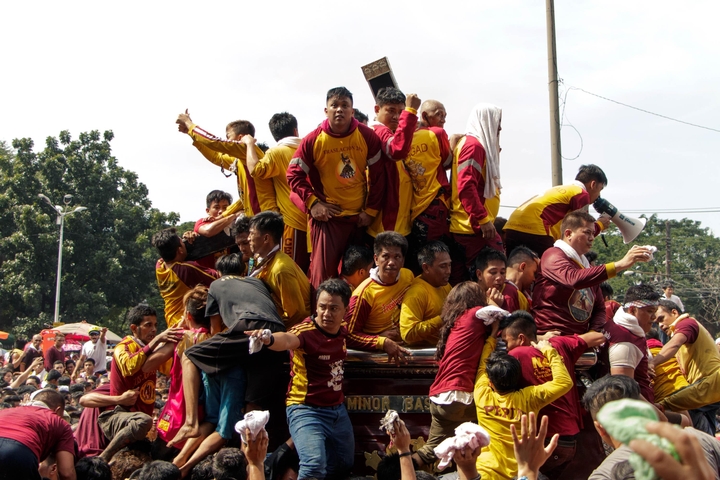

Metro Manila (CNN Philippines, January 5)— An event which typically gathers millions of devotees — the Traslacion or grand procession of the Black Nazarene — is cancelled this year amid the surge in COVID-19 cases.
The National Task Force has approved the resolution suspending physical activities related to the annual religious feast, which was agreed upon by Manila authorities and Quiapo Church officials, Malacañang confirmed on Wednesday.
Here’s a rundown of what to expect during this year’s celebration:
No physical masses, processions
The Minor Basilica of the Black Nazarene (Quiapo Church) will be closed from Jan. 7 to 9, according to the document issued by the task force. No masses shall be physically conducted on these dates, it added.
Manila Mayor Isko Moreno also confirmed there will be no processions this year.
Livestreaming
Masses shall instead be aired online nationwide. Moreno said the Quiapo Church will be providing a livestream of the celebration. “Sarado ang simbahan, online mass tayo [The church is closed, we’ll have an online mass],” he said.
Checkpoints
The Manila police and the Joint Task Force COVID Shield shall establish checkpoints along concerned areas in the city. Officers will also be deployed to help manage the crowd that may gather near the Church.
Liquor ban
Moreno said there will be a strict implementation of City Ordinance No. 5555 which bans the sale of alcoholic beverages and drinking of liquor in areas part of the jurisdiction of the Black Nazarene feast.
The Traslacion, which was also canceled last year, draws millions of barefoot devotees every Jan. 9, as they flock to the heart of Manila to witness the traditional transfer of the venerated image of the Black Nazarene from the Quirino Grandstand to Quiapo Church.
Filipino Catholics believe the Black Nazarene image can bring miracles, as it has endured fires that destroyed its home church, two earthquakes, floods, and even bombings during World War II.
Government officials and health experts have urged devotees to safely celebrate the feast at home.