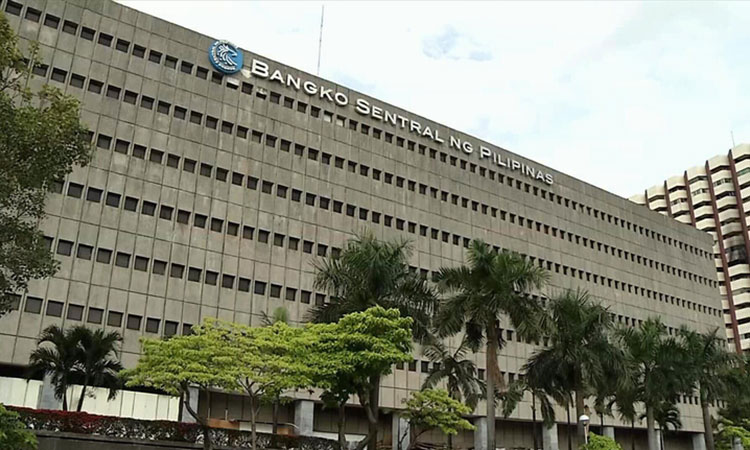

Metro Manila (CNN Philippines, December 15) — With inflation easing anew in November but still above the government’s target, economists project the Bangko Sentral ng Pilipinas will keep interest rates unchanged in its last policy meeting for the year.
“The weakness of inflation means the central bank has the room to keep interest rates low for an extended period,” Capital Economics senior Asia economist Gareth Leather said in a recent note, expecting interest rates to stay at their current 2% record low even throughout 2022.
Inflation has decelerated again last month to 4.2%, after 4.6% in October and 4.8% in September. Still, this is slightly beyond the BSP’s projected 3.3-4.1% range — with Governor Benjamin Diokno acknowledging that the year-to-date 4.5% average points to inflation exceeding the previous 2-4% target for 2021.
“[T]hree consecutive months of moderation in inflation prints have also likely alleviated pressure on the monetary board with respect to price situation,” ANZ Research economist Debalika Sarkar told CNN Philippines.
Diokno likewise assured the central bank “stands ready” to maintain its adaptive stance to support economic recovery, but not without warning first about more transmissible coronavirus variants possibly hampering demand both locally and globally.
“We see the BSP staying on hold at its December meeting, in order to carefully observe any impact of the new (Omicron) variant while continuing to support the nascent recovery with accommodative monetary conditions,” Oxford Economics assistant economist Makoto Tsuchiya also told CNN Philippines.
RELATED: BSP ‘not so concerned’ with Omicron variant, to keep accommodative stance as needed
Tsuchiya projects the BSP will resume rate hikes by the first quarter of 2023, with economic recovery possibly on firmer footing then.
Pantheon Macroeconomics senior Asia economist Miguel Chanco says the central bank could normalize its policy — which has since remained accommodative in a bid to encourage borrowing and jumpstart economic activity — during the first semester of 2023 at the earliest.
Why not next year? Chanco told CNN Philippines it’s mainly because he thinks “economic recovery will disappoint, particularly in the first half of the year, due to election-related headwinds and political uncertainty.”
ING Bank senior economist Nicholas Mapa, however, projects the BSP to raise rates as early as the second quarter of next year.
“We expect the Philippines to post robust growth numbers over the next two quarters, which may be enough to convince Governor Diokno, to finally decide to adjust his current accommodative stance,” he said in a note earlier this week.
For his part, RCBC chief economist Michael Ricafort flagged that external developments such as the United States Federal Reserve possibly hiking rates later in 2022 could lead to similar upward adjustments for central banks around the world such as the BSP.
Tsuchiya likewise noted the Fed’s tapering — known as efforts to hold back on bond purchases — along with a weaker peso could prompt the BSP to pull off a rate hike earlier than desired “to avoid persistently higher inflation through imported price.”
Economists also cautioned the likes of lingering supply-chain disruptions, commodity price increases, and risks of COVID-19 infections surging anew could also weigh on the BSP’s current monetary policy.
The Monetary Board is set to hold its last meeting for 2021 this Dec. 16. It has kept rates unchanged since the surprise rate cut in November last year.
The Philippine economy expanded by 7.1% in the third quarter, defying analysts’ expectations and pulling up year-to-date average economic growth to 4.9% With the strong performance logged this July to September and expected further easing of restrictions this quarter, economic managers hiked their growth estimates for 2021 to 5-5.5%.
On Dec. 14, President Rodrigo Duterte’s economic team announced it now expects inflation to average between 4.3-4.5% this year.