
Metro Manila (CNN Philippines, September 25) — The Philippine economy may hit its pre-pandemic level by the end of 2022, but coronavirus restrictions will continue to hurt the country in the next four decades, with estimated losses amounting to a whopping ₱41.4 trillion, the state’s top economic policy body has predicted.
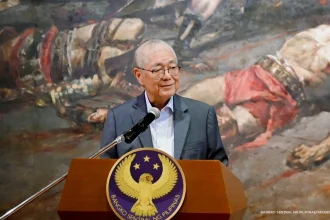
“Over the past six months, NEDA, with assistance from our development partners and attached agencies, has been estimating the total cost of COVID-19 and the quarantines,” Socioeconomic Planning Secretary Karl Kendrick T. Chua said in a statement issued by the agency on Saturday.
“The present and future costs are estimated at ₱41.4 trillion in net present value terms,” he said, referring to foregone revenues that various sectors are seen to experience in the wake of the pandemic and restrictions put in place to contain it.
Still, there are a few strategic moves the government can initiate to help soften the blow and keep the economy on a growth track again, according to the NEDA assessment.
The country may have to face up to ₱37 trillion losses more “in the next 10 to 40 years”, on top of the ₱4.3 trillion recorded in 2020 alone, said Chua, who is ex-officio NEDA director-general.
Chua said the sectors of tourism, restaurants, and public transportation will realize a “reduced demand” due to coronavirus rules, such as social distancing, dampening the consumption and investments in the next ten years.
If businesses will still be barred from opening at their full capacity, tax revenues will also be affected.
The estimated total loss due to weaker consumption is ₱4.5 trillion, the NEDA said.
The pandemic will take its heaviest toll on private investments, with losses seen at ₱21.3 trillion.
Chua also warned that workers’ productivity will also “be lower due to untimely death, illness, and lack of face-to-face schooling”, the impact of which is “likely to be permanent” in the next four decades.
“Based on the study, the resulting productivity loss in human capital investment and returns is estimated at ₱15.5 trillion for the next 40 years,” NEDA said.
Breaking down, ₱4.5 trillion will be losses due to premature deaths and illness-related lost productivity costs. The suspension of face-to-face classes in 2020 to 2021 will also haunt the Philippines, with up to ₱11 trillion losses due to the reduction in future wages and productivity, coupled with lost wages of parents who cut their work hours to monitor their children in online classes.
“The loss in future wages is based on the impact of lower quality education from online and other types of distance learning during the pandemic,” NEDA said.
“Every year of lost schooling leads to a 10% permanent decrease in future wages,” it added, citing a study by the Asian Development Bank.
The school closure in 2020 cost the local economy ₱230 billion, Chua said.
“Its impact over the next 40 years of the students’ lifetimes in the labor force is estimated at ₱10.7 trillion. This impact on productivity is likely to be permanent over the person’s lifetime,” the NEDA chief said.
Chua stressed the need to further ramp up vaccination against COVID-19 across the country, safely reopen the economy through localized lockdowns and pilot face-to-face classes, and implement the recovery program to soften the “long-term scarring effects” of the virus on the economy.
“Our recommendations have not changed. We can still recover to pre-pandemic level by the end of 2022 or early 2023, with a growth rate of 4% to 5% this year, and 7% to 9% next year, if we do these three things,” Chua said.