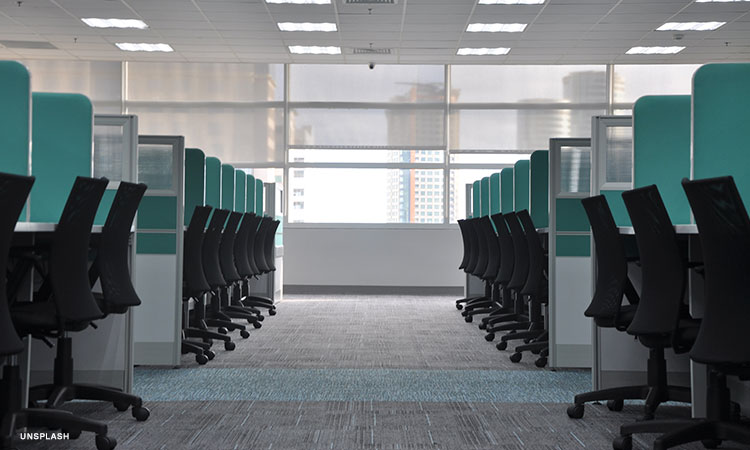

Metro Manila (CNN Philippines, August 24) — More office spaces were unoccupied in Metro Manila during the first half of 2021, according to a property consultancy firm, which also observed a shift to non-traditional work setups among firms.
“As the COVID-19 pandemic stretches on, the overall vacancy in Metro Manila hits another new record high at 13.0% of total grade A office stock in the first half of the year,” KMC Savills said in its latest report.
Atop this came completions of prior delayed projects, which yielded 150,000 square meters (sqm) in fresh office space during the second quarter of the year, it added.
KMC Savills noted that while leasing activity began picking up, non-renewals and pre-termination among tenants kept subduing demand for the period.
The real estate brokerage firm also cited a pivot towards non-traditional working arrangements of offices among several industries, as sectors assessed their current operations amid the COVID-19 pandemic. Firms across the globe have adopted alternative work setups in a bid to maintain productivity and keep personnel safe from the coronavirus.
“We have observed a shift away from dense work areas to work-from-home or hub-and-spoke models all over the country,” said KMC Savills, which also flagged a possible supply-demand imbalance with the lack of new tenants making their foray into the market.
“This will keep leasing conditions in the occupiers’ favor in the short term, resulting in flight to quality and discounted premium space,” it added.
These higher vacancy rates have also affected rent levels, according to KMC Savills, citing in particular how prices in the nation’s capital fell by 1.6% year-on-year for the second quarter.
“Landlords may look to offer generous concessions to help them attract and/or retain tenants. Lessees, however, may look to go bargain hunting given the surplus of new stock in their chosen submarkets,” KMC Savills explained.
How are office space submarkets faring?
For instance, in premiere financial business district Makati, about 68,500 sqm of office space had been vacated since the pandemic’s onset. Bargain hunters could look for high-end options that may be bagged at a discounted price, the firm said.
KMC Savills added that it expects the city’s vacancy rate to remain in the double digits, noting nearly 110,000 sqm of office spaces are slated to go online in the quarters ahead. Makati logged a vacancy rate of 10.7% for the second quarter.
On the other hand, Alabang emerged as the “biggest loser” since the beginning of the pandemic – seeing the vacancy rate jump from 4.6% in the first quarter of 2020 to 17% from April to June this year.
“With the (Philippine Offshore Gaming Operator) and (business process outsourcing) industries being the market’s leading tenants, we may continue to see volatility in the coming periods,” added KMC Savills, which also cited restricted travel among office workers as reducing the business district’s appeal.
An additional 123,000 sqm in office space set for completion through next year may also push vacancy rates up, it added.
Meanwhile, only 140,000 sqm out of the previously projected 245,000 sqm in spaces are expected to become available this year in Bonifacio Global City. KMC Savills said it expects construction delays as developers moved project turnovers to early 2022.
“Amid vaccination rollout picking up and office occupiers gearing towards repopulating their physical footprint in the second half of the year, vacancy rates are expected to increase further,” it added.
In Ortigas Center, organizations have been reengaging the market and taking advantage of “increasingly tenant-favorable” conditions in the district, according to the firm. About 73,700 sqm of office space had been occupied in the first half of 2021 in the district, the highest among all submarkets in Metro Manila.
“While Ortigas Center’s leasing activity has been on an uptrend during the first half of the year, vacancies are expected to rise further in the short-term,” it said, noting vacancy rate may reach 30% next year with 300,000 sqm in spaces projected for completion in the next 15 months.
KMC Savills also flagged how Quezon City has “not been able to utilize its appeal as a hub-and-spoke office option,” noting it failed to reel in new tenants. It ended the second quarter of 2021 with an 18.3% vacancy rate – with KMC Savills expecting further decline in the periods ahead given the city’s aging office stock.
“With no projected building completions until the end of 2023, Quezon City may have to rely on its varied locations and proximity to established residential communities to attract tenants in the future,” it added.
The Bay Area logged a 8.2% vacancy rate in the second quarter, KMC Savills said, adding it recorded a “positive net take-up” of around 34,800 sqm. Pre-leasing remained active in the district, it added.
“It should be noted, however, that 375,900 sqm of Grade A office space is set for completion in the next 12 months. This may cause further drag in the overall growth of the submarket with vacancy rates projected to go beyond 20% by 2022,” the company explained, adding less volatility may be expected once POGO regulations in the country become clearer.