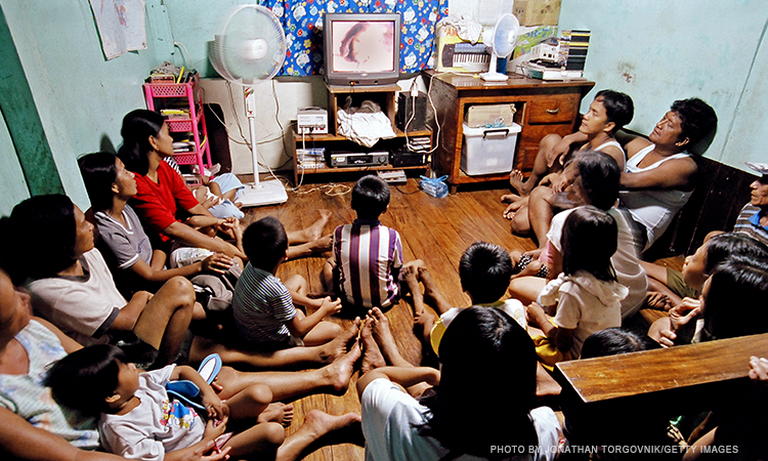

Metro Manila (CNN Philippines, July 8) — Government census data pegged Philippine population at 109 million as of May 2020, and initial estimates showed this kept on rising during the pandemic.
The lockdowns which started in March 2020 led to a baby boom as couples stayed home, according to the Commission on Population and Development or POPCOM.
Former Economic Planning Secretary Ernesto Pernia, an expert in economic demography and professor emeritus at the University of the Philippines School of Economics, said the census figure is likely understated. The population is likely more than 110 million by now.
The government must work even harder as it has more mouths to feed, Pernia said, at a time when jobs have been lost, incomes dropped down, and prices have been rising.
“It will require a lot of resources, it will require a lot of subsidies from the public sector to these families. But as you know, we already are having difficulty addressing the pandemic and the economy has shrunk considerably,” Pernia told CNN Philippines.
Meanwhile, the Department of Agriculture said it is counting on the “Plant, Plant, Plant” program to yield enough crops and feed a fast-growing nation.
“Given the proper budget and with the private sector and LGUs (local government units) pouring in needed investments, the country’s agri-fishery sector could attain higher food sufficiency levels and provide the needs of our countrymen,” DA Secretary William Dar said in a statement.
Stunting
Access to nutritious food is crucial for babies and their mothers, especially for those with less in life.
“Some pregnancies are unwanted or mistimed therefore their pregnancy is not properly carried,” Pernia said. “For the baby to come out healthy, the mother must be well nourished because she will be feeding the fetus –– that’s why we have these stunted children.”
UNICEF data showed that one in three Filipino children under the age of 5 is stunted, or shorter than what is expected for a healthy child at that age. They are more likely to earn less and will likely be sickly as adults.
For the former NEDA chief, undernourished children face an “almost doomed” future as they are unlikely to reach their full potential as adults due to malnutrition during their formative years.
Quality of life
Pernia stressed the importance of family planning to increase the chances of providing better lives to children.
He said local campaigns started in 1969 but was short-lived amid resistance from religious conservatives. In contrast, a similar effort in Thailand took off to yield better outcomes.
“Not having been able to contain population growth like Thailand was able to is a really huge missed opportunity for the country,” Pernia explained.
“It’s a huge difference between Thailand and Philippines –– that’s why Thailand is a much more dynamic, progressive, developed country compared with the Philippines,” he said. “Naiwanan talaga tayo [We were really left behind].”
Thailand’s 70 million population is a third lower than that of the Philippines, according to World Bank data. However, Thailand’s economy is 32.5% bigger and per capita income is double when compared to the Philippines.
Pernia also noted that family size matters across all income groups, but more so for poorer households.
“Let’s say you have seven or six children, mahihirapan ka talaga [you will really have a hard time] rather than if you are having only two or three children – maski mayaman ka [even if you are rich],” the economics professor added.
“It’s an unimaginable hardship. It’s hard to imagine how poor people, poor families are coping during this pandemic,” Pernia said. “Instead of living life well, it’s just existence.”
He added that vigorous implementation of the Reproductive Health law and information campaigns, along with better education, are keys to keeping population growth under control, while better-paying jobs may help keep newborns out of the poverty trap.
READ: Undernutrition a problem in PH as Filipinos can’t afford a healthy diet— World Bank
RELATED: Duterte pushes for family planning, citing social distancing challenges
RELATED: Duterte declares teen pregnancy prevention a national priority