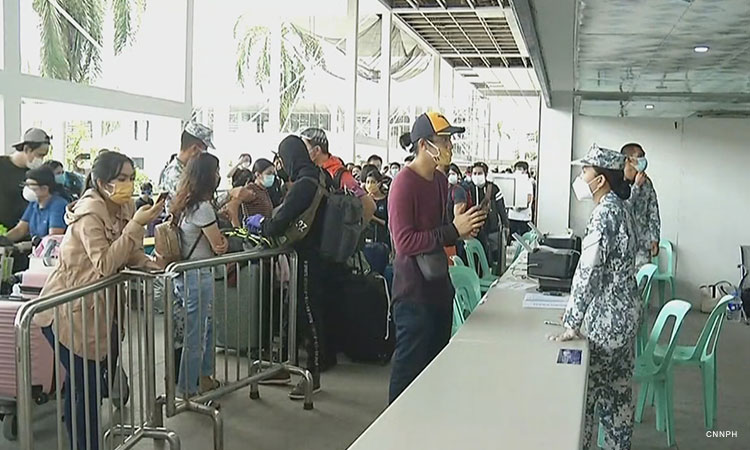

Metro Manila (CNN Philippines, July 6) — Returning overseas Filipino workers will receive help for both physical and mental health concerns, the Overseas Workers Welfare Administration said Tuesday.
OWWA Director Rosalia Susana Catapang said this at the Laging Handa briefing, assuring OFWs that they will be looked after when they arrive home.
“Lahat ng umuuwi na may sakit, maging pisikal man or mental illness, ay dinadala sa designated quarantine facility. Dedicated yon sa mga may sakit na OFWs,” she said.
[Translation: All those returning who are sick, whether it be physical or mental illness, are brought to designated quarantine facilities.]
READ: Experts suggest 10-day quarantine for returning OFWs
Health professionals like nurses and midwives are present 24/7 to attend to the needs of patients, she added, These medical personnel would also also accompany patients to hospitals if the need arises.
When asked about how the agency handled cases of mental illness, Catapang said they have measures in place for such cases.
“Iyong mga may mental illness po na kailangan po talagang dalahin sa mental institution, mayroon pong tie-up ang OWWA with the NCMH (National Center for Mental Health), at dinadala po natin doon iyong mga kababayan po natin na kailangan po ng hospital-based care po,” she added.
[Translation: Those with mental illnesses and should be brought to mental institutions, there is a tie-up with the NCMH, and we bring them there is they need hospital-based care.]
Labor Secretary Silvestre Bello III said as of April 19, at least 519,566 overseas Filipino workers have returned since the start of the pandemic.
Repatriation efforts are ongoing although the country has extended the ban on on travelers from India, Pakistan, Nepal, Bangladesh, Sri Lanka, Oman, and the United Arab Emirates until July 15.
The Inter-Agency Task Force, however, has released a list of areas considered as “green” or “low-risk” amid the COVID-19 pandemic.