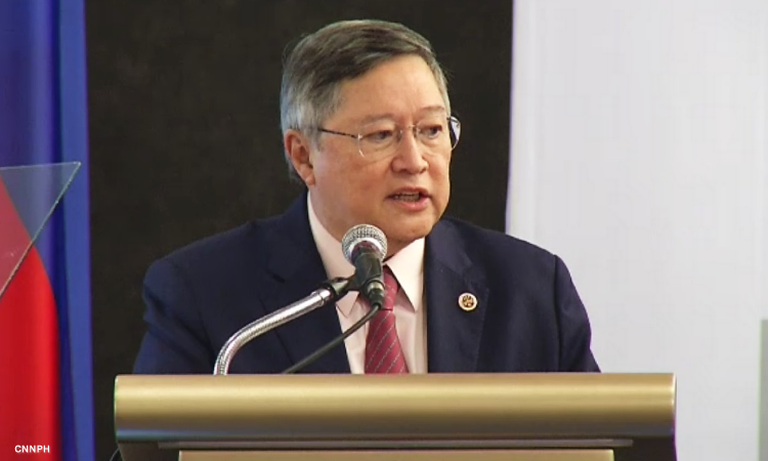

Metro Manila (CNN Philippines, June 15) — Finance Secretary Carlos Dominguez III said the country’s debt level is currently “high,” but assured that this is still sustainable and can be managed in the future.
During the televised Cabinet meeting Monday, Dominguez explained that the country’s budget deficit surged from 2019, the “last normal year,” with the onset of the COVID-19 pandemic. He noted that from a deficit of ₱666 billion in 2019, this has ballooned to ₱1.37 trillion in 2020 and is estimated to reach ₱1.86 trillion this year.
This, as revenues are seen to remain low because of a restricted economy, and expenditures increasing due to programs needed to address the health crisis. For this year, Dominguez said revenues are seen to reach ₱2.88 trillion, slightly higher than last year’s ₱2.86 trillion, but still lower than 2019’s ₱3.14 trillion. Expenditures are estimated to total ₱4.7 trillion, higher than 2020’s ₱4.23 trillion and 2019’s ₱3.8 trillion.
“We had to borrow money because humina nga ang economy tapos bumaba pa ang collections (the economy slowed dow and collections declined),” Dominguez noted.
For 2021, the finance chief said borrowings may reach ₱3.1 trillion, up from 2020’s ₱2.7 trillion and 2019’s ₱1 trillion. In terms of percentage of gross domestic product, 2021’s estimate would be 58.7%, compared to 2020’s and 2019’s 54.5% and 30.96%, respectively.
Dominguez said this situation is only temporary and that the economy will revert to normal again by 2022 or 2023 once it reopens and the coronavirus is eliminated. He added the country’s credit ratings have not been downgraded despite current fiscal situation.
“We think that the debt level of our country is high, but it is sustainable, and we can manage to handle this debt in the coming years,” he said.
Dominguez also assured that the government has enough funds to purchase all COVID-19 vaccine doses needed. He noted that the ₱85 billion budget is enough to purchase 140 million doses for 70 million Filipinos, which is the entire adult population.
If the country decides to vaccinate children aged 12-15 years old, allocation will not be a problem as well, according to him.
“If we have to vaccinate children 12-15 (years old) we estimate that will cost another ₱20 billion, but we have enough reserves to cover that amount of money,” Dominguez said.
“We don’t have to worry. The money is there, and we will certainly be able to vaccinate the entire adult population and the teenagers (who are) around 15 million,” he added.