
Metro Manila (CNN Philippines, April 28) — There has been a phenomenal rise in interest in NBA cards in the last couple of months. Nostalgia plays a big part in the sudden boom, as many basketball fans in the previous decades grow up trading them.
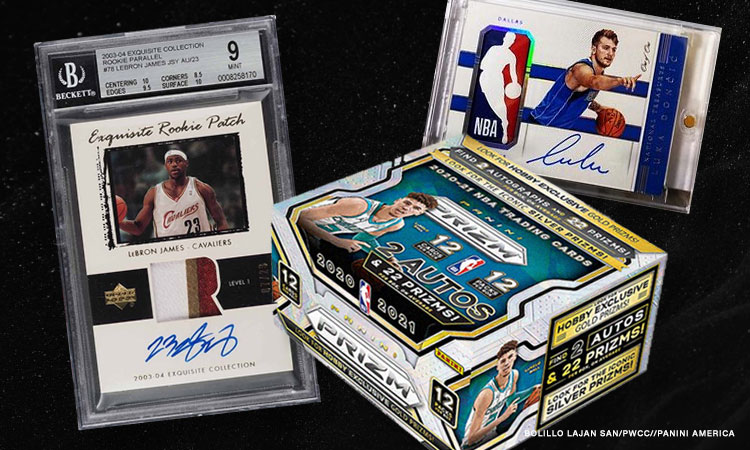
Just recently, an “ultra-rare” rookie card signed by four-time champion LeBron James was sold for $5.2 million, breaking the record for the most expensive basketball card ever sold.
If you’re seriously considering jumping into the NBA cards business, here are a few pointers:
KNOW THE VALUE OF THE CARD
The value of an NBA card, much like any other collectible, depends on multiple factors, like the featured player, the year it was manufactured, and what part of a collection the card is from.
Rookie cards are typically priced the highest because the potential of the players will dictate the value.
Emerging stars like Luka Doncic, Zion Williamson, and Ja Morant have captured the attention of the community. As a result, the prices of their rookie cards have skyrocketed.
Some of the popular card sets in the country are Panini Prizm, Panini Mosaic, Panini Select, Panini Chronicles, and Panini Illusions. The first three tend to have a higher value than the latter two. This knowledge could come in handy when choosing which to buy.
FAMILIARIZE YOURSELF WITH THE BASIC DETAILS OF THE CARD
Apart from knowing the featured player of your card, check the year and card company’s name as well. Both are usually seen on the card itself.
The card company’s name is printed in front of the card while the card’s year is normally the copyright date or the final year of the player’s listed stats.
Some of the basketball cards have a card number. If you see something like 3/30, it means there are 30 cards in the set and the one you have is the third card — a factor that may help raise its value.
You can check the list of sold items similar to your card. You can base your selling price on these and see if there are interested buyers.
JOIN SOCIAL MEDIA GROUPS FOR EXPOSURE
The best way to learn the game is by joining legitimate groups. This is where you’ll see how other collectors sell their cards and also learn business jargon.
There are instances when a seller may ask their previous customers to vouch for their credibility. At the end of the day, being transparent is key if you want to be successful in the business.
GRADED CARDS
When it comes to choosing a grading company, it is best to do your research. Ask fellow collectors who they use and why.
Currently, most of the NBA cards in the country have been graded by these two reputable and established companies: Professional Sports Authenticators (PSA) and Beckett Grading Services (BGS).
PSA is the largest and most trusted third-party trading card authentication and grading company in the world. Since it began in 1991, it has certified over 40 million cards.
Meanwhile, BGS provides collectors with the most thorough, consistent, and accurate grading in the industry.
These two companies use a 1 to 10-point grading scale with descending increments of one-half point. The cards are graded on four key categories: centering, corners, edges, and surface.
Fees for their services are based on the number of cards submitted and the desired amount of time you want your cards graded and returned, plus shipping fee since it will be coming from the US.
QUICK TERMS TO REMEMBER
Auto (short for autograph) – the card was personally signed by the player
Base – regular or basic cards, which may contain 30, 60, 90, or more cards per set
Box break – opening of a box or boxes by an individual or group
Patches – cards that contain game worn jerseys
Parallel – a modified base card which may contain hologram stamping
Blaster box – a box of cards that can be purchased in retail stores
Cello pack – a form of card packaging that was wrapped in a transparent packaging like cellophane
OBO (or best offer) – buyers are able to make offers on the card which are less than the asking price
RC (rookie card) – a card of a player from his first year in the league