
Metro Manila (CNN Philippines, April 27) — The country’s fiscal deficit ballooned in March to more than double its size a year ago, as government expands expenditures while revenues from taxes and various levies continue to plunge.
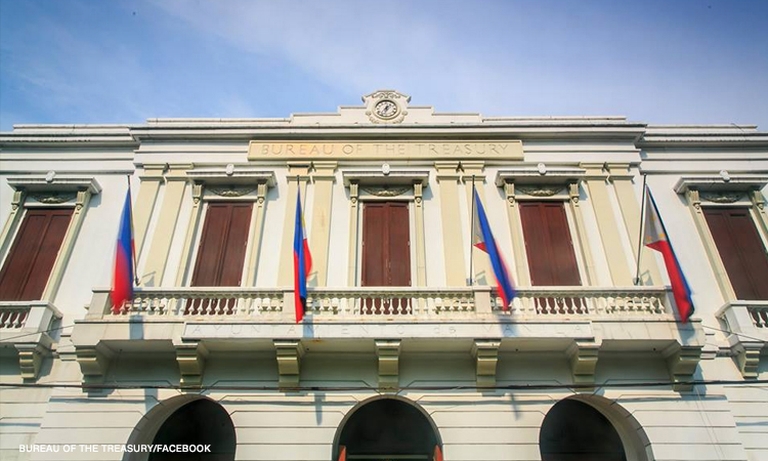
The budget deficit grew to ₱191.4 billion during the month, a big rise from the ₱71.6 billion in the same month last year, the Bureau of the Treasury reported Tuesday. Government spending rose by 22.3% annually, but revenue collections dwindled by 17.3% in the period under review.
A budget deficit happens when the government spends more than it collects in terms of revenues from taxes, customs duties and other fees.
State expenditures shot up in March to ₱407.6 billion from ₱74.4 billion a year ago. Disbursements for infrastructure projects of the Department of Public Works and Highways, along with social welfare programs of the Department of Social Welfare and Development, the Department of Labor and Employment, and the Overseas Workers Welfare Administration primarily drove the surge, said the bureau.
“The continuing implementation of the Bayanihan II for initiatives such as the Rice Resiliency Program of the DA (Department of Agriculture) and health programs of the DOH (Department of Health) also contributed significantly to the strong spending performance in March,” the Treasury noted.
However, government revenues dropped to ₱216.2 billion, from ₱261.6 billion logged a year ago. The Treasury attributed this to the “the high base effect of dividend remittances in 2020.” Most government-owned and controlled corporations (GOCCs) already remitted dividends to the bureau in compliance with the Bayanihan to Heal as One Act, it further noted.
This led to the Treasury’s income significantly dropping for the month. From ₱77 billion last year, it only recorded ₱16.1 billion in earnings this March. Other factors the bureau cited were the lower collection of interest of advances from GOCCs and the national government’s share from the income of Philippine Amusement and Gaming Corporation.
Meanwhile, the Bureau of Internal Revenue saw collections inched up by 1.2% year on year to ₱133.4 billion, with a net of ₱830 million for tax refunds.
The Bureau of Customs collected ₱54.7 billion during the month, higher by 22.5% from the ₱44.6 billion it collated in March 2020 due to what the Treasury called “improved valuation and intensified collection efforts.”
Collections from other offices, referring to other non-tax revenues including privatization proceeds and fees and charges, amounted to ₱10 billion in March. This reflects a 39.6% annual growth, said the Treasury, attributing it to a low base effect from the declaration of stricter quarantine measures during the month.
These figures brought the government’s budget deficit for the first quarter of 2021 to ₱321.5 billion, way up from the ₱86.2 billion during the same period last year.
“The hard lockdowns in NCR Plus since the latter part of March 2021 resulted and would still continue to lead to wider budget deficits in the coming months,” said RCBC chief economist Michael Ricafort, referring to both hampered government collection efforts due to stricter quarantine measures forcing many businesses to once again close shop.
He also cited increased public spending on various COVID-19 programs such as social amelioration, procurement of vaccines, and pump-priming activities especially ones involving infrastructure to support the government’s economic recovery program further.
Wider fiscal deficits, Ricafort further said, could lead to more state borrowings and a higher overall debt stock.
The country’s outstanding debt already breached ₱10.4 trillion in February, a new all-time high, as the government continues to borrow from both local and foreign sources to finance its pandemic response and relief efforts.
As of end-2020, total government loans — then at ₱9.79 trillion — were already equivalent to 54.5% of the local economy.