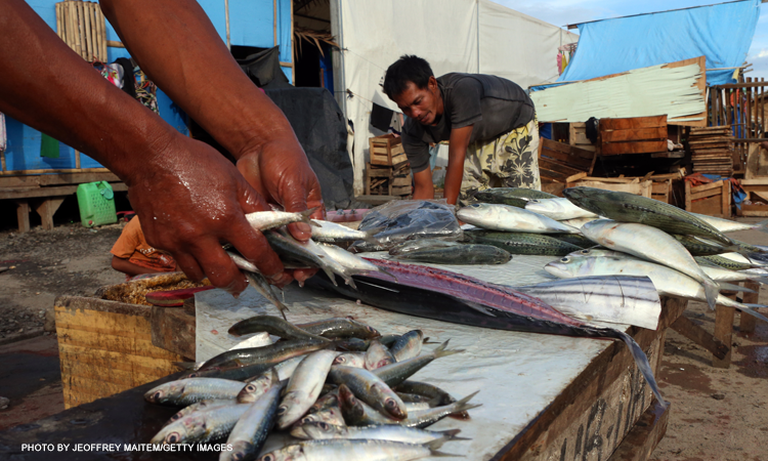

Metro Manila (CNN Philippines, March 10) — A report by an international development agency revealed that up to 40% of fish caught in 2019 in the Philippines came from illegal fishing.
Based on the report published by the United States Agency for International Development and the Bureau of Fisheries and Aquatic Resources released on March 9, illegal, unreported, and unregulated fishing in the country ranged from 27% to 40% in 2019, which is equal to around P62 billion in annual losses.
IUU fishing is any form of unlawful fishing practice by small and large-scale operators that causes great threat to the marine ecosystem. This has been a problem of developing countries, like the Philippines, which lack resources to implement better monitoring and surveillance of fishing grounds.
The report also noted that 30%, or 30,000, of municipal vessels remain unregistered, and commercial fishers do not report up to 422,000 metric tons of fish per year.
“These statistics show the vast impact IUU fishing has on the Philippines’ marine ecosystem,” USAID said in a statement.
Data analyzed by the USAID were collected from a workshop it conducted in September 2020 with the BFAR, Rare Philippines, the University of the Philippines Marine Science Institute, and the UP School of Statistics. More than 100 experts were included in the said workshop who estimated the quantity and value and all things related to illegal fishing in the country.
Domestic response needs augmentation
USAID emphasized that while the Philippine government has invested in the campaign to address illegal fishing, “its operational assets have to be augmented to curb the country’s huge economic losses from destructive and unsustainable fishing practices.”
It added that there is a need for a strong, responsive structure to promote fisher compliance to laws and regulations, and that eliminating this problematic fishing practice requires a whole-of-society approach guided with science.
For his part, BFAR Director Eduardo Gongona assured that the government is finding ways to address the matter with the ongoing development of an IUU Fishing Index and Threat Assessment Tool that will be adopted in Fisheries Management Areas across the country.
“This tool will provide us with periodic information needed to identify other ways to encourage voluntary compliance, strategically guide law enforcement operations, and clearly communicate our progress in reducing IUU fishing in the Philippines,” he added.
Based on data from the Philippine Statistics Authority, total fisheries production in 2020 declined 0.3% to 4.403 million MT from the previous year.
Broken down, commercial fisheries output, which accounted for 22% of total data, improved by 5% to 978,170 MT; municipal fisheries, which accounted for 25% of total output, recorded a 2.1% decrease in its total output at 1.101 million MT; and aquaculture farms that contributed 52.8% to the sector, reported a 1.5% decline in its total production at 2.324 million MT.