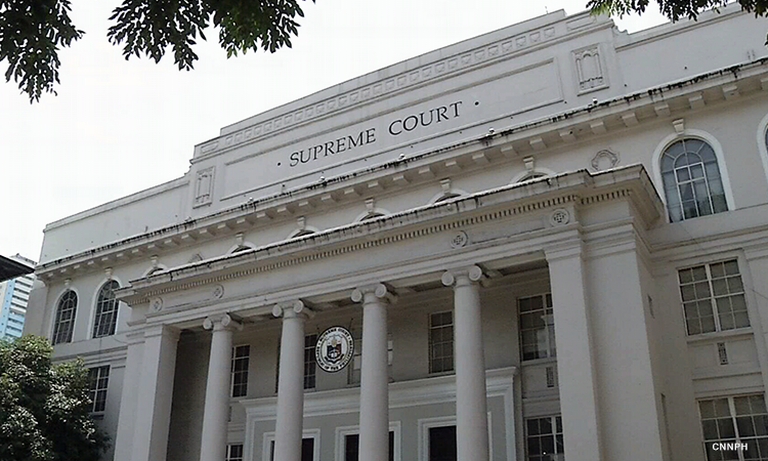

Metro Manila (CNN Philippines, January 15) — The Supreme Court postponed the oral arguments on the Anti-Terrorism Act for two weeks upon the request of government top lawyer Jose Calida, who reported that his Assistant Solicitor General and some staff members caught the coronavirus.
Calida previously asked the high court to cancel the oral arguments, citing the coronavirus pandemic, and insisting that it should not be a trier of facts. Whether or not the petitioners’ direct resort to the Supreme Court is proper will be among the issues expected to be discussed by Anselmo Cadiz, the Solicitor General during the previous Aquino administration.
The schedule has been moved from January 19 to February 2 at 2:30 p.m., the high court announced Friday in a statement signed by Clerk of Court Edgar Aricheta.
CNN Philippines’ Anjo Alimario contributed to this report.
“No further postponement will be allowed,” the statement read.
According to the Supreme Court, an Assistant Solicitor General and some of Calida’s staff who were supposed to assist him during the much-anticipated oral arguments tested positive for COVID-19. Their names were not disclosed.
Calida was allowed to bring with him up to three lawyers to help him defend the controversial measure. The law was signed by President Rodrigo Duterte six months ago despite calls against it, including from UN High Commissioner for Human Rights Michelle Bachelet.
The Anti-Terrorism Act is now the most challenged law in the Supreme Court’s recent history. Lawyers and framers of the Constitution, legal experts, and human rights advocates say the “unconstitutional” measure relaxes safeguards against abuse, something authorities have repeatedly denied.
There are 37 sets of petitioners, but they were asked to choose only eight lawyers to argue their case. They have submitted seven names, including Cadiz, and have asked the Supreme Court to also accommodate six alternates.
The court also allowed the other petitioner groups to send one counsel each to physically witness the discussions. They were asked to manifest their attendance by January 13 so the necessary logistical arrangements can be made and social distancing ensured amid the COVID-19 crisis.