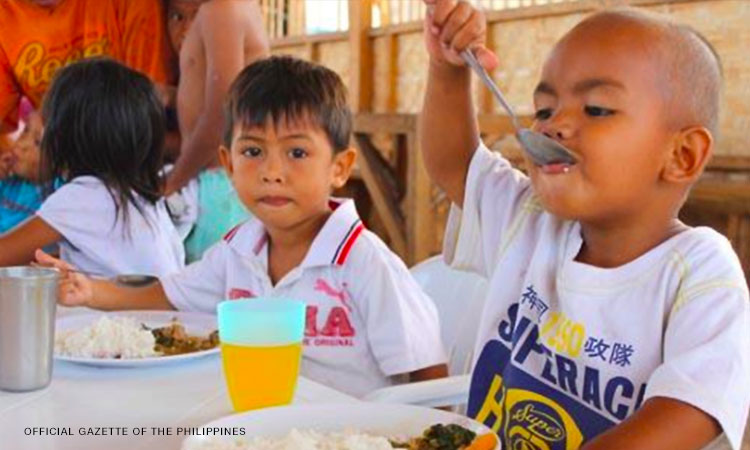

Metro Manila (CNN Philippines, December 16) — Some 4 million families experienced hunger at least once in the past three months, lower than 7.6 million recorded in September, a recent survey by the Social Weather Stations revealed.
The SWS conducted its first face-to-face survey since the start of the COVID-19 pandemic from November 21 to 25, which showed families who experienced involuntary hunger, or hunger due to lack of food to eat, eased to 16% in November from the record-high of 30.7% reported two months prior.
However, the latest data is still double the pre-pandemic level of 2.1 million in December 2019. This also brought the average full-year hunger rate to record-high 21.1%, beating the 19.9% recorded in 2011 and 2012, and is more than double the 2019-level of 9.3%.
Of the November data, 12.6% experienced moderate hunger, or those who experienced hunger “only once” or “a few times” while 3.4% felt severe hunger, or those who experienced it “often” or “always.”
Per region, hunger incidence is highest in Metro Manila with 23.3%, or around 780,000 families, followed by Mindanao (16%), Balance Luzon (14.4%), and Visayas (14.3%).
The survey also revealed that hunger rate increased for both poor and non-poor families. Compared to December 2019, overall hunger rose among self-rated poor to 21.7% from 12.8%, as well as in non-poor from 4.1% to 10.6%.
This also rose among self-rated food poor, from 15.5% to 28.1%, and among non-food poor, from 5.1% to 10.5%.
A self-rated poor family means the head of the household rate the family poor. If the head considered the family as food-poor, then the family is classified as self-rated food-poor.
The survey involved 1,500 household heads across the country, with 600 in Balance Luzon, 300 each in Metro Manila, Visayas, and Mindanao.
This had sampling error margins of ±2.5% for national percentages, ±4% for Balance Luzon, and ±6% for Metro Manila, the Visayas, and Mindanao.