
Metro Manila (CNN Philippines, November 18) — Banks and financial firms should update their loan pricing systems, saying that old risk assessment schemes no longer apply under the “new normal,” regulators said.
In a report released Wednesday, the inter-agency Financial Stability Coordination Council or FSCC said risk models should keep up with the more uncertain times due to the COVID-19 pandemic to ensure that more loans are granted.
Since the pandemic has pulled the global economy to its knees, local authorities said this has directly affected domestic activity, including access to credit, as financial firms turn risk-averse.
The Bangko Sentral ng Pilipinas has loosened existing rules to prod banks to lend more, even bringing interest rates to an all-time low to also entice individual and corporate borrowers to take out a loan and support economic activity. Still, Lenders are reluctant.
Credit growth slid to just 2.8% in September from 4.7% in August, against expectations of the central bank of a more buoyant lending activity.
For those who lend, rates may not be as low as expected for segments considered as more unlikely to repay their dues. Limited credit lines also mean a potential funding crunch, with the FSCC pointing out that many investors currently prefer just short-term placements.
“The heightened risk aversion among banks has concentrated liquidity with them but these have not been redeployed to reboot economic activity, making the recovery a more difficult proposition,” the report read.
“This suggests that unless the risk aversion is addressed, any economic forecast of future growth that rests on the premise that risk aversion can self-correct is contentious, particularly if the transition period is protracted,” it added.
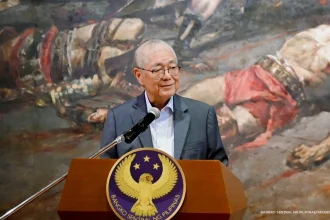
For Securities and Exchange Commission chair Emilio Aquino, financial firms should offer loan and investment products with “fair risk premiums.” Meanwhile, Philippine Deposit Insurance Corp. president Roberto Tan sought to allay fears about debt payments, saying the banking system remains strong.
Confidence down
Finance Secretary Carlos Dominguez III also said that a record plunge in consumer confidence is holding back the economy’s return to growth.
“At this point, the fiscal response is definitely on track. We are really facing a problem on people’s confidence in the system,” he said during a virtual briefing. “No matter how much fiscal response you have, if people don’t have confidence of going out and spending, it’s not really going to work.”
However, Dominguez said the local healthcare system can aptly care for anyone who will get sick, noting that minimum health standards enforced outdoors reduce chances of infection.
Policy makers also bear the tough balancing act between economic interventions and health measures in the face of the COVID-19 crisis.
“With the damage that COVID-19 has already created, we believe that consumer preferences, risk behaviors and how things will be done in the New Economy will be fundamentally different in key aspects,” the FSCC report added. “In this sense, forecasting an uncertain future using the older norms may not be as effective.”
RELATED: About 60% of bank loans benefited from grace periods