
***
Metro Manila (CNN Philippines) — Growing up in a city with only one movie theater within a 40 km radius meant that I was only exposed to two kinds of films: Hollywood blockbusters or Philippine studio system darlings. Whenever people speak about the golden ages of Philippine cinema, I could never relate. We never had access to any of these films. As I grew older, I found out that many others were also deprived of these collective, cinematic memories.
So when I heard that a microcinema was starting along Maginhawa Street in 2017, I was ecstatic. I was a broke grad student at UP Diliman (still am) who had just finished his last requirement for the semester. With a few friends in tow, we climbed up the stairs in between the Maginhawa Ministop and Bebe’s, entered the transparent double doors, and bought tickets to the midnight screening of “Respeto.”
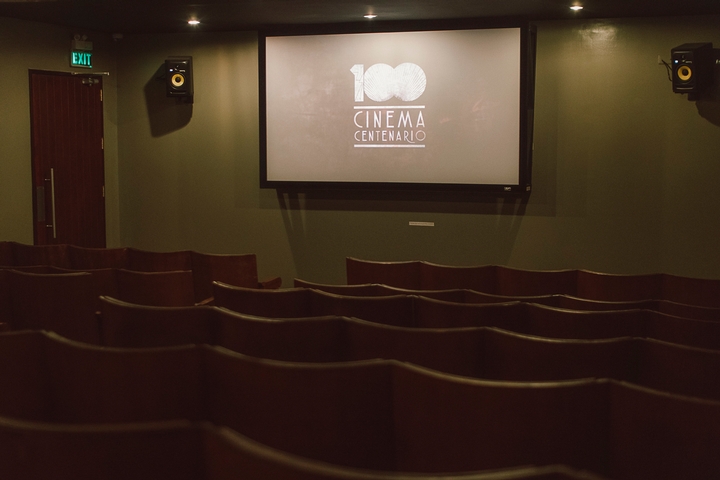
After one and a half hours of sheer awe, I knew that I had found a space I would revisit in the years to come. Ushered out of our mahogany seats and into the narrow lobby, we discussed the film and asked about their lineup for the next year. I only recognized this rush later on in my life: the feeling of belongingness; like I was finally a part of some history that I was missing out on. Since then, all food-hubs seem to only be stopovers on the way to this new Quiapo for filmgoers.
Now, when I think of Maginhawa, I think of Cinema Centenario.
Like history, cinema is often dominated by grander narratives that make it through the mainstream consciousness while smaller yet similarly important narratives are pushed to the peripheries. Alternative cinema has offered a countermovement: curating not based on the popular and profitable but on the important and intimate; not for the mainstream but for the misfits. These spaces become home not only to filmmakers who are developing a following, but also to the viewers who want something different; something outside the formula of the studio systems and the barrage of Marvel movies.
So when I saw the news on Facebook that it was closing, my heart sank. But I wasn’t blindsided. Many spaces for the younger generation such as Today x Future had closed earlier due to the strain from the pandemic. Listening to film podcasts and being an actor myself, I knew that theaters weren’t exempt from this (though I wish it was). Even if it were to open, very few people would probably be willing to go. With the end of this pandemic nowhere in sight, it would be too risky. So Cinema Centenario closed its doors, owing it to “safety and sustainability.” Even until the end, it was still thinking about its viewers.
A few memories immediately return to me when I think of this space:
UPDATE: A few days after the announcement of their closure, Cinema Centenario launched a virtual moviehouse called “Moov,” which aims to “create a multi-sectoral online community of movie lovers.” Read more about it on their website.
– Being late to a screening of “Hintayan ng Langit” with two of my friends but still weeping in the front row during Lisang’s monologue near the end,
– Singing “Will You Ever Learn” along with the audience as we laughed and cried during “Cleaners,”
– Winning a raffle that allowed me to watch all of the QCinema 2020 films,
– Learning about film criticism for the first time thanks to the CINELAB project with Richard Bolisay and creating Cine Critico Filipino; and
– Reconnecting with many friends that wanted to watch a Filipino film that we missed out on because of our provincial upbringing.
But I am not alone in this mourning nor in this remembering. Artists and filmmakers have spoken up in the comments section of Cinema Centenario’s farewell post to talk about how this small cinema has held space for smaller, independent filmmakers. Viewers have unearthed three years worth of memories and it is a bittersweet read: failed dates, long distance travels, life-changing experiences, you name it. I don’t know if the owners have gone through all of these messages of love and support, but I hope they do. It should show them that, should they choose to open their doors again someday, there is a line already in waiting.
I read somewhere that Cinema Centenario was created in the hopes of building a community of film lovers: ones who saw the greatness in Filipino filmmaking, beauty in Filipino stories, and a space for Filipino storytellers.
I hope they know that they succeeded.