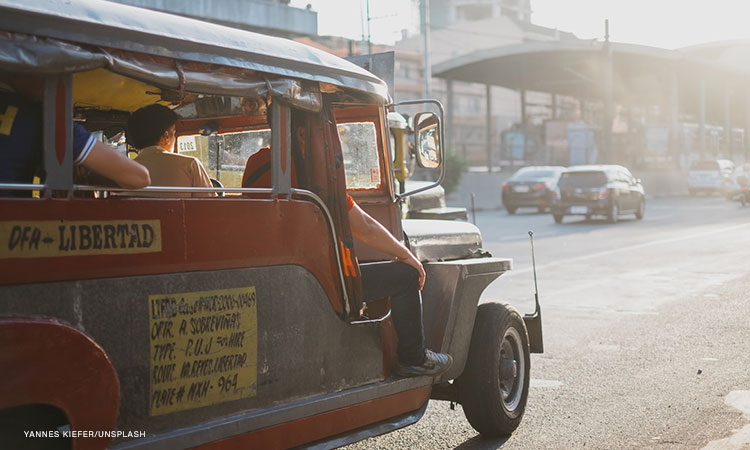

Metro Manila (CNN Philippines, July 28) — The government has allowed almost 2,000 more traditional jeepneys to ply their routes starting July 29, Wednesday.
The Land Transportation Franchising and Regulatory Board announced on Monday that 1,943 public utility jeepneys may operate in designated routes without applying for special permits.
“Per Memorandum Circular 2020-029, traditional PUJs with routes indicated in the MC can ply their existing routes with no special permit necessary starting 29 July 2020,” the advisory read.
Jeepneys under the following routes will be operational:
T106 MCU – Sangandaan
T109 Novaliches – Rizal Ave. via A. Bonifacio
T111 Tandang Sora – Visayas Ave. via Quezon City Hall
T112 Monumento – Paco, Obando via M.H. Del Pilar
T114 Quirino Highway – Sta. Lucia
T203 Crame – Cubao via Murphy
T204 Crame – Q. Mart via P Tuazon, E. Garcia
T214 SSS Village, Marikina – Cubao, Quezon City
T215 Parang,Marikina – Marikina (TP) via Fortune
T216 Guadalupe (ABC) – Taguig via Tipas
T217 Calumpang – Cubao via P. Tuazon
T304 Ayala – Guadalupe (Ibabaw) via JP Rizal
T337 Libertad, Pasay – Pasay Rd.
T341 Paco – Sta.Mesa Rtda via Nagtahan
T342 Pier South – Sta. Ana via P. Faura
T345 Navotas – Recto via Heroes Del 96
T346 Gate 5 – Greenhills Shopping Center Loop
A QR code available at the LTFRB website will be issued to the operator prior to operation. This must be printed in short bond paper and displayed in each unit.
The existing fare matrix shall still be imposed — ₱9 for the first four kilometers and ₱1.50 for every succeeding km. No fare adjustment must be applied unless approved by the Board.
The LTFRB also reminded PUJs that only those registered roadworthy with the Land Transportation Office and with valid personal passenger insurance policy may ply their routes.
Operators must ensure that drivers comply with the government’s health and safety protocol such as checking of body temperature and wearing of face masks. They should also operate at 50 percent maximum capacity.
Early this month, the LTFRB has allowed over 6,000 traditional jeepneys to operate across the capital. This will now bring to a total of over 8,000 operational jeepneys after a months-long suspension due to quarantine protocols in Metro Manila.