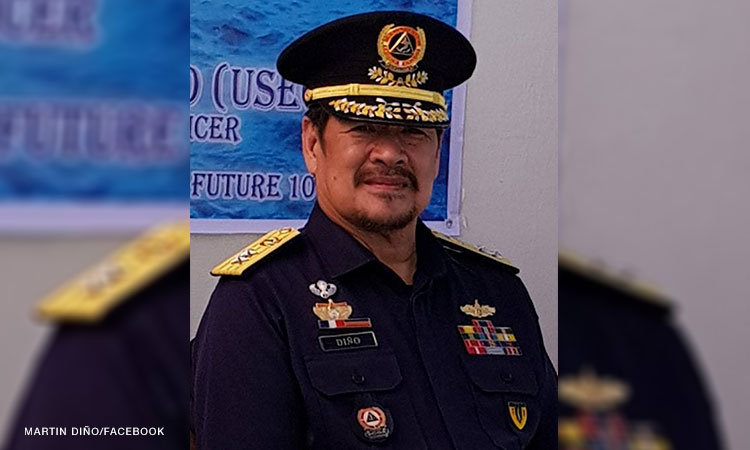

Metro Manila (CNN Philippines, July 19) – Interior Undersecretary for Barangay Affairs Martin Diño’s idea to hold a “shame campaign” against COVID-19 patients refusing to undergo quarantine in government facilities drew flak on social media.
Speaking in an interview with 92.3 News FM aired July 17, Diño said such a campaign is important to curb the spread of the coronavirus.
“Kaya nga ngayon, tama nga rin siguro na magkaroon na din tayo ng shame campaign dahil hindi na biro itong COVID,” Diño responded when asked about how to support Oplan Kalinga, the government’s plan on sending mild or asymptomatic coronavirus patients without sufficient home quarantine facilities to government isolation centers.
Two days later, Diño apologized for having said the remarks.
“I’m sorry, misquoted ako dun sa shame campaign. Ang sinasabi ko diyan, I-shame campaign na natin yung mga walang face mask,” Diño said in an online media forum Sunday.
He added, “Hindi ko sinasabi na i-shame campaign yung mismong may sakit. We will protect nga them eh. Nagkamali siguro, hindi lang nagkaintindihan kasi mabilisan yung question,” referring to how he was asked during the interview.
[Translation: I am sorry, I was misquoted when I said the term “shame campaign.” I was saying, we should put in a shame campaign those who refuse to wear face masks. I wasn’t referring to those who contracted the coronavirus. We will protect them. There may have been a mistake or misunderstanding as the questions were asked fast.”]
Commission on Human Rights spokesperson Atty. Jacqueline de Guia also weighed in on the remarks and reminded government agencies to address the issue as a health problem.
“We must remember that this is a health issue and that the primordial concern of the government at the very onset and up until now is to make sure that the health of the people is protected. Therefore, shaming them (COVID patients) is not at all protecting them nor having their best interest at heart,” Atty. De Guia said in a phone interview.
Diño also reiterated the importance of the Oplan Kalinga program, saying in the vernacular that it is free of charge. He also added that policemen will only have a supporting role in the system, and that healthcare workers will be the ones knocking on the doors of suspected patient’s homes.
“Yung mga nagsasabi na may tokhang, wala po. Ang purpose lang natin, buhayin yung mga pamilya nung mga, asymptomatic, symptomatic (COVID-19 patients),” Diño said, allaying fears that the program is a mirror image of the PNP’s drug operations.
[Translation: Those who think that there will be something similar to Oplan Tokhang, there won’t be any. The only purpose (of Oplan Kalinga) is to save lives of both asymptomatic and symptomatic patients.]
Diño, however, expressed his view that a “show of force” be done to make Metro Manila residents better comply with quarantine rules.
His suggestion: heavily armed police with armored vehicles patrolling barangays, similar to the deployment of PNP Special Action Force (SAF) personnel in Cebu alongside their armored personnel carriers.
“Yung Cebu, bakit in one month’s time, napababa natin? (In Cebu, why is it that in one month’s time, we were able to lower the number of cases?)” Diño explained, linking the decline in cases to measures he called “style-Martial Law.”
“Nakita niyo, yung may merong mga APC, yung mga ganun. Kasi ang kukulit daw. Sabi nga ni Presidente (Duterte), matitigas ang ulo ng mga Cebuano. O, hindi naman pala eh,” Diño claimed, citing the national police’s response to lockdowns in the Central Philippines as being effective that no one dared to go out of their homes.
But for the chief executive of the city with the most COVID-19 cases in the National Capital Region, responses to the pandemic must be measured against the current situation.
Speaking to CNN Philippines, Quezon City Mayor Joy Belmonte says a two-pronged approach of information and education coupled with the enforcement of minimum health standards in line with existing laws and ordinances, is already more than enough in managing coronavirus cases in the city, which ranges from 80-150 new infections daily.
“Every situation merits a different approach,” Belmonte said in a text message. “At present, Quezon City has a higher recovery rate than active cases. We are the 16th local government unit (LGU) in the country in terms of cases per million even if we are the most populated city in the Philippines. QC also doesn’t have an overburdened healthcare system, yet with bedspaces still available in our facilities,” she added.
Belmonte added, “I believe it is still premature for us to adopt the methods that have been adopted in Cebu, and if the trend in our city continues as is, hopefully our numbers will go down without us ever having to adopt this method.”
She also said the mayors of Metro Manila’s 16 cities and one municipality meet on a weekly basis, and that Interior Secretary Eduardo Año is “almost always present” in these discussions.
“There are certain things that we Metro Manila Mayors must agree on and implement uniformly because the NCR is really contiguous and it makes no sense to differ in policy,” Belmonte added, citing examples such as the region’s quarantine status.
CNN Philippines has reached out to Secretary Año and the DILG Spokesperson, Undersecretary Jonathan Malaya, for their insights on the issue. Both have yet to respond for a request for comment as of press time.
“But with regard to other things, they respect the autonomy of the local government unit (LGU) if we choose to do things differently. These policy differences must be within the parameters and guidelines furnished by the Inter-Agency Task Force,” Belmonte said, citing differences in liquor sale policies among the different Metro Manila local governments.
[Translation: That’s why now, it might be right to a have a shame campaign since this COVID-19 is a serious matter.]