
Metro Manila (CNN Philippines, June 16) — The Zamboanga City government is raising concerns on its capacity to let in thousands of Filipino evacuees from Sabah, Malaysia, and is asking the national government for “long-term intervention”.
“(I) wrote a letter to (Philippine) Ambassador (to Malaysia) (Charles) Jose expressing Zamboanga City’s difficulty este tiempo porcausa de (this time because of) COVID,” city mayor Maria Isabelle “Beng” Climaco told CNN Philippines in a series of text messages.
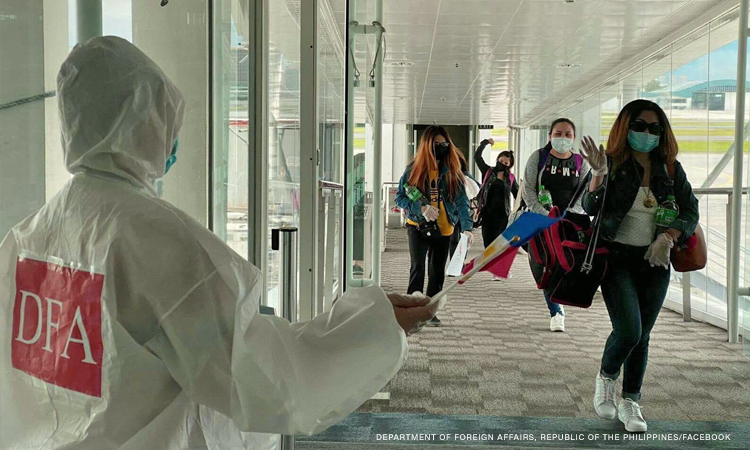
Climaco is responding to National Task Force on COVID-19 Chief Implementer, Sec. Carlito Galvez’s announcement late Monday night that “more or less 5,000” Filipinos are set to be repatriated from Sabah either by “last week June and July”.
“Nakiusap po ang ating DFA (Department of Foreign Affairs) na magkaroon po ng kaunting delay para at least ma-prepare po natin yung ating tinatawag na Zamboanga One-Stop Shop,” Galvez said, in his report to President Rodrigo Duterte.
[Translation: “The DFA is requesting to delay the process so it can can better prepare the so-called Zamboanga One-Stop Shop.”]
The “one-stop shop” is a mechanism of different government agencies coming together in one location to expedite the processing of repatriates upon their return to the country, before they are transported to their respective cities and provinces. The same concept was used in mid-2000 when the Malaysian government rounded up thousands of Filipino illegal immigrants in jails and detention centers, then deported them back to the Philippines. One-stop shops were set up in disembarkation points for deportees or “halaws” in Zamboanga City and Bongao, Tawi-Tawi.
Climaco admits being wary about the plan to bring home the evacuees through Zamboanga City at this time, especially since the city remains under general community quarantine due to a significant number of COVID patients.
“DOH (Department of Health) needs to address health concerns with Bureau of Quarantine and DSWD (Department of Social Welfare and Development) will have difficulty, as some areas for repatriation are still on lockdown,” Climaco explained.
Aside from the paced arrivals of evacuees, Climaco is hoping the capacity of the city’s COVID testing centers will be increased, in anticipation of thousands of Sabah repatriates who will need to undergo RT-PCR tests.
There is also concern about the city’s quarantine facilities to house evacuees while awaiting their test results, as well as the availability of stand-by air, land or sea transportation that could immediately bring them home to their hometowns once they are cleared to travel.
“We need to put up a system for testing, database, contact tracing, BHERT (Barangay Health Emergency Response Teams) monitoring and response, as well as border control and management,” Climaco added.
Climaco said she is in touch with Galvez on how to address the city government’s concerns.
Among the options is to also set up a processing center in the BARMM (Bangsamoro Autonomous Region in Muslim Mindanao) such as Tawi-Tawi. Both Zamboanga City and Tawi-Tawi are known transit points to Sabah.
“Since this is an international concern, national government intervention is needed,” Climaco pointed out.