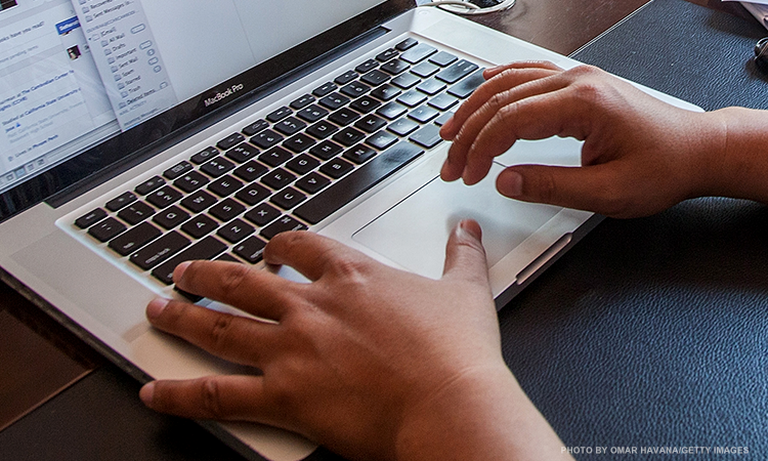

Metro Manila (CNN Philippines, June 11) — Education sector experts on Thursday raised their concerns on distance learning, which will be implemented next school year as the threat of coronavirus disease persists.
This approach revealed a digital divide, as a lot of students do not have access to technology.
In Bangsamoro, which consists of the provinces of Lanao del Sur, Maguindanao, Sulu, and Tawi-Tawi,“not all areas have access to internet and computers,” Mohagher Iqbal, minister of the Bangsamoro Ministry of Basic, Higher and Technical Education said during the Senate inquiry on the impact of the pandemic on the country’s basic education system. He said only 20 percent of the region has internet access.
Meanwhile in Tawi-Tawi, an island province, mobile signal is also a problem, Iqbal added.
Because of these reasons, Bangsamoro may use a mix of online and in-person learning approach to deliver lessons once classes begin, the official said.
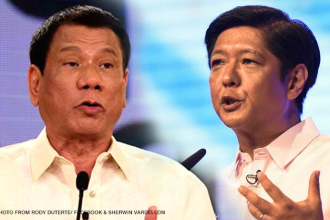
Education Secretary Leonor Briones previously said once the school year opens on August 24, the delivery of lessons could be done through the use of the Learning Resources portal and DepEd Commons, TV, radio and learning modules and packets both in print and digital format. DepEd has postponed face-to-face classes until a vaccine for COVID-19 becomes available, in compliance with President Rodrigo Duterte’s directive.
A public high school in Bacolod also faces connectivity issues, the National Association of Public Secondary Schools of the Philippines or NAPSSPHIL said in the same hearing.
NAPSSPHIL President Warlito Rosareal said that in Bacolod City National High School, teachers and learners rely on mobile data, which is “less stable than broadband connections.”
Rosareal noted that while they are ‘supporting’ the shift to virtual classes, the school needs the ‘support of government’ by providing free internet access.
Meanwhile, an educator pointed out that shifting to home learning may possibly hurt the reading progress of elementary students.
Sergio Cabrera, Public Schools District Supervisors Association, asked, “Sinong magulang ang magaling magaling magturo ng reading sa primary grade students?”
[Translation: Are parents capable of teachIng reading to primary grade students?]
Cabrera argued that this may likely be the scenario for those taking the blended learning approach, which means that parents need to facilitate modular learning from home.
The department is racing against time to train teachers for online and blended learning and finish their learning materials, which will be delivered to students with slow internet connection and lack of personal gadgets.
Nearly 10 million enrollees for next school year
Almost 10 million learners from both public and private schools have enrolled remotely for the next school year, the Department of Education said.
“Our data shows at 9,961,396 learners have already registered,” the DepEd head said.
This translates to 36.26 percent of the department’s projected enrollment for academic calendar 2020 to 2021.
Calabarzon has the highest number of enrollees so far with 1.6 million, followed by Metro Manila with 1.4 million and Central Luzon with 1.1 million, Briones said.
Learners have until the end of the month to enroll, Briones said.