
Metro Manila (CNN Philippines, May 29) — The country’s summer capital ramped up its testing capacity as part of efforts to control the coronavirus, the local chief executive said Friday.
“From a testing capacity of about 700 a day, umakyat na kami ng mga (we already increased capacity to) 2,000 a day,” Baguio City Mayor Benjamin Magalong told CNN Philippines’ Just the Facts on Friday.
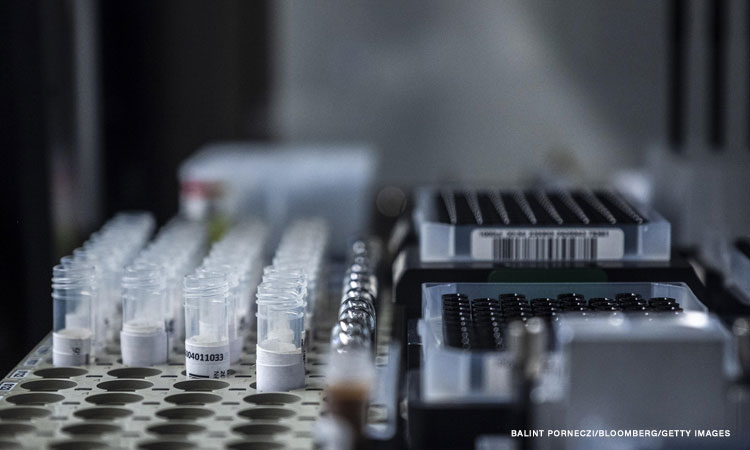
Magalong said the city has six polymerase chain reaction machines, the so-called gold standard in testing, from just one and two automated extraction machines from just manually extracting RNA to determine possible infection.
The mayor said they are training medical technologists to sustain the city’s molecular laboratory operations.
“At the same time, we are also working closely with the private sector and hopefully they will be able to put up their own molecular lab sometime in June,” Magalong said.
Magalong said it was easy to acquire accreditation from the Health department since the Baguio General Hospital and Medical Center was already a designated testing center for the entire Northern Luzon. The challenge, he added, was the acquisition of test kits. He said in six weeks that the city was under enhanced community quarantine, it only had 17,000 test kits for the estimated 10.5 million population of Northern Luzon.
With help from the Task Force on COVID-19, the city got 10,000 kits, and is expecting 20,000 more, he said. This is aside from the equipment given to the molecular laboratory.
Magalong also cited the help of the private sector with the donation of PCR test machines.
On his request to the Inter-Agency Task Force for the city to transition to modified general community quarantine from general community quarantine, Magalong said he is still waiting for the official reply.
He said the city has complied with four critical parameters, namely, robust contact tracing, heightened testing capacity, stronger health infrastructure, and the acceptance of the people to transition to the “new normal.”
Baguio was placed under enhanced community quarantine along with Metro Manila until May 15 then transitioned to GCQ along with other areas in Cordillera Administrative Region on May 16, including Abra, Apayao, Benguet, Ifugao, Kalinga, and Mountain Province.
Data from the Health department showed that as of May 23, cases in Baguio City reached 31, with 28 recoveries and only one death.