
Metro Manila (CNN Philippines, May 11) — Despite a significant reduction in passengers, there will be no changes in the fare rates of Metro Manila’s public utility vehicles should the enhanced community quarantine be modified after May 15.
“We do not have any fare adjustment as of the moment but we are looking into it. We are trying to see if there is a need for one,” Transportation Undersecretary Artemio Tuazon Jr. told CNN Philippines’ New Day on Monday.
“From the time that we went to the community quarantine, there has been a reduction of fuel prices already – about ₱9 reduction in fuel prices. So, there might be no need for us to adjust the fare. But we’re looking into it right now,” Tuazon said.
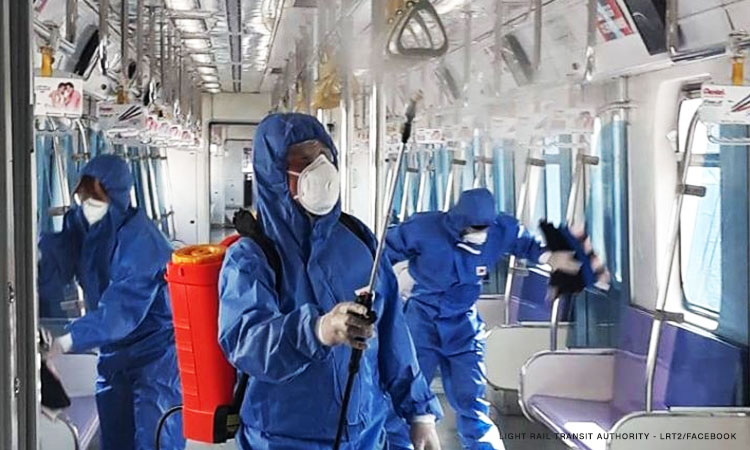
The DOTr earlier announced that Light Rail Transits 1 and 2 (LRT-1 and LRT-2), the Metro Rail Transit-3 (MRT-3) and the Philippine National Railways (PNR) will operate at a reduced capacity by May 16, or after the ECQ is lifted in the region.
During the hearing of the Senate public services committee on Monday, Land Transportation Franchising and Regulatory Board chair Martin Delgra said all kinds of public transport will not increase their rates to reduce the plight of the commuting public.
“In consultation with the DOTr (Department of Transportation), the LTFRB decided not to increase the fare for all types of public transport that would be allowed to run,” Delgra said.
He said the department will assist drivers through subsidies in fuel cost and other expenses as they will have to ply their routes with a smaller income due to limited capacity of passengers.
The ECQ in Metro Manila is scheduled to end on May 15, but there are various proposals to extend it, shift to a less strict general community quarantine, or put in place some modifications to the ECQ. President Rodrigo Duterte is expected to decide soon on the matter. He is scheduled to submit on Monday his 7th weekly report to Congress on his use of additional powers in dealing with the COVID-19 health crisis.
When they do run again, the major train lines are expected to operate at a 10 to 13 percent capacity equivalent to an average of 150 passengers per train set, based on the Transportation Department’s simulation of passengers maintaining one-meter social distancing.
Train marshals will also man the trains to enforce the safety protocol.
The DOTr is also looking into shortening the headway time or the time interval between two successive trains to accommodate more trips and to get more passengers to their destination.
Ride-hailing services: No Angkas, JoyRide, less passengers for Grab
Meanwhile, Tuazon said drivers of taxis and transportation network vehicle services like Grab can only accommodate a maximum of three passengers once they resume operations.
“For Grab, the maximum passengers will be three passengers and a driver so that will be a total of four persons inside the car. One [passenger] in front and two at the back.
Tuazon said the same protocol will be applied to private vehicles.
However, operation of motorcycle ride-hailing services like Angkas and JoyRide will still not be allowed as social distancing cannot be enforced in these vehicles.
“That’s really the challenge. In terms of viability, I would say there is obviously a decrease in terms of the expected income that they would have but at the same time, humihingi rin sila ng tulong sa gobyerno (they are also seeking aid from the government),” Delgra added, citing the concerns of some bus operators and transport groups that the agency met with last week.
Earlier in the day, the DOTr already noted that the railway system will not impose any fare hike in its railway systems.
For other modes of public transportation, the Transportation Department said that it will follow a hierarchy of public utility vehicles based on mode and capacity.
“We have the buses which are high capacity. Next we have the modernized jeeps, the forward facing jeeps. It has better capacity and also it’s easier to implement the social distancing in the forward facing seating of the modernized jeep,” Tuazon said. “The third one is the only time that the regular jeeps come in – the old jeeps that we have.”
The President has placed the entire Luzon under the enhanced community quarantine on March 17, which banned all modes of public transport. He extended its implementation until May 15 in Metro Manila, Central Luzon, Calabarzon, and all other high-risk areas.
Meanwhile, the LTFRB advised PUVs to secure special permits from the agency before they hit the road. Routes will also likely be calibrated depending on the directive of the agency and other local government units.
The implementation of an automatic fare collection system will also be imposed to limit the contact between the conductor, passengers, and the driver.
Cashless transactions may be done via GCash or PayMaya for taxis and TNVS units whether they pick up passengers online or on the road.