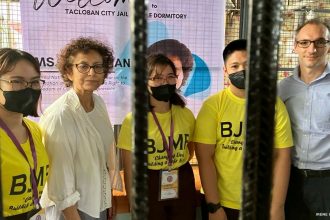

Metro Manila (CNN Philippines, May 7) — In its fight against COVID-19, the Philippine government can learn from communities dealing with the HIV pandemic, the Joint United Nations Program on HIV and AIDS or UNAIDS said Thursday.
UNAIDS regional director Eamonn Murphy bared that a multi-sectoral approach should be sustained in the country’s health care system, with the medical sector taking an active role in decision-making on how to curb the spread of the virus.
“International institutions, governments, the scientific community need to be at the forefront of decision-making. This should not just be a political response,” Murphy told CNN Philippines’ New Day.
“It needs to bring together the multi-sectoral nature — everyone, the [science sector], the medical fraternity, the frontline providers working with the people who are affected by COVID-19 [to see] the dynamic of the impact,” he added.
Murphy noted that the country’s health system will remain strong as long as everyone, especially the vulnerable, is granted equal access to it.
“We have to make people feel that they could get services as early as possible and not wait because of restrictions like having to pay [for their medical needs],” Murphy said. “We can’t put in place restrictions either, the fear factor or blaming the people who contract COVID-19. They don’t know that they are gonna get it.”
While no vaccine has been made available to prevent HIV infection, communities worldwide have dealt with it by doing away with fear and stigma. A similar thing must be continuously applied towards a sustainable COVID-19 response, he added.
The UNAIDS reported in 2019 that the Philippines has been ranked as the country with the fastest growing number of HIV cases in the world, with about 77,000 cases.
By the end of 2018, 13,384 infections were recorded in the country — 203 percent higher than infections recorded in 2010, with only about 4,419.
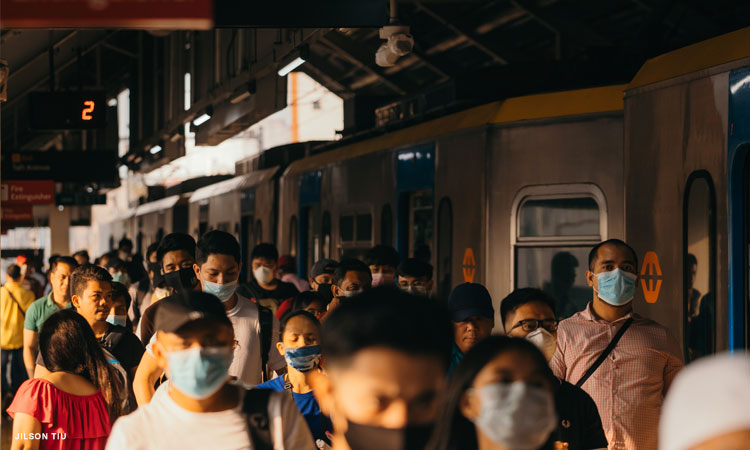
Meanwhile, the Philippines’ COVID-19 cases have already breached 10,000 on Wednesday, with the death toll at 658. There were already 1,506 recoveries from the infection.
Dr. John Wong, a member of the sub technical working group tapped by Inter-Agency Task Force for Emerging Infectious Diseases in creating projections on COVID-19 scenarios, said the country has started to flatten the curve with a slowdown of cases and little or no deaths.
But for the Department of Health, the country should not solely look at the number of cases. Testing capacity and the ability to manage suspect, probable and confirmed cases must be further improved.
Health Secretary Francisco Duque III previously said that the government anticipates a stockpile of 12 million to 15 million personal protective equipment which could last for three months.
The country is also preparing to raise its 5,000 daily testing capacity to 30,000 tests a day by the end of May.