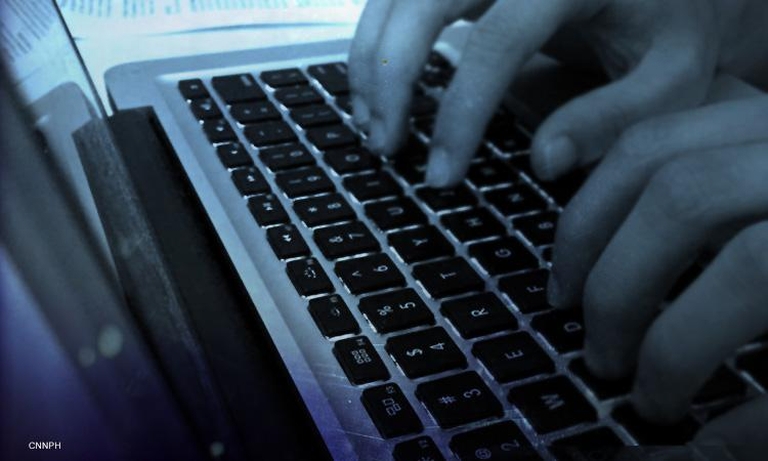

Metro Manila (CNN Philippines, April 27) — The National Bureau of Investigation warned the public against online scammers, as it sees a doubling in the number of cybercrime cases in the country amid the coronavirus lockdown.
NBI Cybercrime Division Chief Victor Lorenzo told CNN Philippines that while authorities have recorded a drop in general ordinary crimes, cybercriminals are capitalizing on the pandemic to victimize web users.
“‘Yung mga scammers at hackers, na-anticipate nila na pag nag-lockdown mag-oonline tayong lahat [The scammers and hackers have anticipated that during lockdown, all of us will go online],” Lorenzo said. The cybercrime incidence in the country has increased “by 100 percent” since the onset of the stay-at-home order, he added.
Phishing attacks
A sample scheme is sending bank account deactivation notices, which prompt unsuspecting people to act quicker and disregard security measures by clicking on unsafe links which request for personal information.
According to Lorenzo, the most common form of cybercrime are currently phishing scams, wherein criminals lure individuals to disclose sensitive personal data, such as bank account details and passwords, by disguising as a legitimate entity.
Lorenzo said these scams are designed to exploit fear and create a sense of urgency among potential victims.
The cybercrime division chief advised the public to check the URL, or the address of the webpage, if it contains the internet extension “HTTPS (Hypertext Transfer Protocol Secure),” which is a standard internet protocol for secure communication.
“Ang tatandaan lang natin kung may HTTPS, mas secured ‘yun. Sa mga phishing sites kasi, wala ‘yun,” he said.
[Translation: What we need to remember is that if a URL contains the HTTPS, the site is more secured. Phishing sites do not have the HTTPS protocol.]
However, internet users are still advised to be extra-vigilant, as a 2019 report by the Anti-Phishing Working Group revealed that cybercriminals have even gone so far as adopting the HTTPS protocol in its fraudulent sites.
Lorenzo said another technique scammers use is posing as call center agents from banks and asking for one-time passwords given to users during online transactions.
“Hihingin nila yung nareceive mo na one-time password mo sa email or mobile phone mo. ‘Di mo alam nagta-transact na sila on your behalf,” he said.
[Translation: They will ask for your one-time password which you received through email or mobile phone. You wouldn’t know that they’re already transacting on your behalf.]
Donation scams
Scammers are even taking advantage of the public’s desire to help amid the pandemic.
NBI said fraudsters are creating fake social media pages or mimicking genuine charitable entities to solicit cash donations from individuals willing to assist those affected by COVID-19. Cybercriminals then edit the bank account details where donors deposit cash, Lorenzo said.
“Meron pa kunwari nagdo-donate sila ng bigas, ‘yun pala pino-promote lang nila na ma-entice ‘yung public to place their donations with them,” he added. “Parang props lang ‘yung nid-donate nila to activate the interest of the public to support efforts nila during the crisis.”
[Translation: There are even those who pretend they’re donating rice, but the truth is they’re only enticing the public to place their donations with them. What happens is the supposed donations turn out to be mere props to activate the interest of the public to support efforts by also donating during the crisis.]
Lorenzo encouraged interested individuals to donate cash only to government institutions or well-known entities.
Online shopping scams
With the stay-at-home order in place, shopping websites may also have heightened appeal, especially considering the added convenience of home delivery.
However, the NBI also cautions against online purchases, as shopping sites have likewise become a breeding ground for malicious actors who pose as legitimate sellers.
Lorenzo explained that bogus sellers also capitalize on a false sense of urgency by claiming the items are the last ones available of its batch.
“At the same time, ‘yung masyadong mababa ‘yung discount — ‘yun yung tell-tale signs na ‘di totoo yung transaction,” he added.
Lorenzo reminded buyers to conduct “a series of checks” and scrutinize online sellers first before committing to purchasing.
“Nasa atin din kasi. Kapag masyado tayong excited, nalilimutan na natin yung series of checks. Ang formula dyan is yung mas mataas at mas substantial ‘yung ibabayad mo, mas mataas din yung checks na gagamitin mo,” he said.
In the same way that criminals are exploiting cyberspace, users should also leverage their use of the internet to detect fraudulent sellers, the chief said. He suggested searching for the image of the item posted by the seller and checking if the same photo has been posted elsewhere.
“‘Yung mga cybercriminals, considering wala naman ‘yung item talaga, ni-grab lang din naman [nila ‘yung photo] sa internet,” he said.
[Translation: These cybercriminals also just grab the photos on the internet, considering they don’t really have the item they’re supposedly selling.]
Online buyers are also encouraged to ask for and confirm the contact details of sellers they are purchasing from. “Try to check baka yung pangalan [ng seller] ay may mga complaint na over the net,” Lorenzo said.
Buying ATM cards for fraud
In order to remain anonymous, criminals are purchasing active ATM (Automated Teller Machine) cards with low balance to use as a depository bank account for all their stolen money.
“Kasi ngayon minsan pagka talaga ang employer hindi magpapasweldo—no work, no pay—nangangailan ‘yung tao ng pondo kay napipilitan magbenta ng ATM [sa scammer],” he added.
[Translation: Especially if employers are not paying workers due to a ‘no work, no pay’ scheme, some people are desperate for cash and are strained to sell their ATM cards.]
Lorenzo said they have already been able to arrest suspects of various online scams operating during the crisis.
“Sa totoo lang naman, lagi naman natin sila mahuhuli. Hindi kasi sila titigil hangga’t ‘di sila nahuli. Kaya sooner or later mahuhuli rin sila,” he said.
[Translation: In truth, we will always be able to catch them. They won’t stop until they’re caught, that’s why sooner or later, we will be able to arrest them.]
Those who have fallen prey to online scams should immediately report the incident to authorities, Lorenzo said. Victims may call the NBI’s trunkline 523-8231 or visit the agency’s website containing contact details of specific NBI units.
[Translation: At the same time, if the item seems overly discounted, that’s also a tell-tale sign that the transaction may be fake.]
[Translation: It’s also up to us. If we’re too excited, we forget the series of checks. The formula here is that if you’re paying a more substantial amount, you should also increase your security checks.]