
Metro Manila (CNN Philippines, April 24) — While the country is busy battling the coronavirus disease, a health reform advocate is calling on the government to prepare for the rainy season when hospitals are usually crowded with patients suffering from typhoon-related illnesses.
Dr. Tony Leachon, one of the health expert advisers of the COVID-19 task force, said the country’s healthcare system should be ready when this time comes.
“The new normal life natin we’ll be muddled by typhoons na darating sa atin. Kasi with typhoons are increased number of dengue, pneumonia, influenza,” Leachon said.
[Translation: Our new normal life, we’ll be muddled by typhoons. Because with typhoones are increase number of dengue, pneumonia, influenza cases.]
Prepare hospitals for non-COVID patients
Weather bureau PAG-ASA is expecting the typhoon season by end of May or in June. According to the Department of Health’s data in the past five years, the number of dengue cases usually start to increase by June. At least a hundred thousand dengue cases are reported yearly since 2015.
A total of 271,480 Filipinos had dengue in 2019, 1,107 of them died.
Leptospirosis, another common disease during typhoon season, hit 3,011 cases last year, which resulted in 314 deaths.
Today, majority of the hospitals in COVID-19-hit regions, especially in Metro Manila are overwhelmed with suspected or confirmed coronavirus cases.
Leachon said the government should act faster in transferring coronavirus patients to referral facilities so that other patients may be attended to.
As of April 24, at least 75 hospitals have been designated for COVID-19 including the Philippine General Hospital, Jose N. Rodriguez Memorial Hospital, and Lung Center of the Philippines. There are also mega-quarantine facilities in Metro Manila and Central Luzon.
“Sa Manila Doctors parang 80 percent yata dun COVID cases e – either positive or PUI… Kung lilipat sila sa mga COVID hospital na prepared na then we can disinfect the hospital so that they will be open for, well, patients mga hypertension, diabetes,” Leachon said.
[Translation: At Manila Doctors, I think 80 percent are COVID cases – either positive or PUI (patient under investigation). If they will be transferred to COVID hospitals which are already prepared then we can disinfect the hospital so that they will be open for, well, patients with hypertension, diabetes.]
“’Yung mga clear (non-COVID) cases na walang kacheck up check up ngayon (Those clear cases who do not undergo ay checkup now).”
DOH working on transferring COVID-19 cases
Health Spokesperson Maria Rosario Vergeire said the Health Department is hastening the transfer of COVID-19 patients to avoid further aggravating the already overwhelmed hospitals when typhoon season comes.
“Ito ay tinitingnan nang maige ng ating mga program managers para wag sana pumatong na problema natin,” Vergeire said. “Andami nang reports sa amin for these past days na talagang medyo nacrowd out ang mga pasyente nitong covid na ito. Nawawalan ng espasyo ang non-COVID cases.”
[Translation: Our program managers are thoroughly looking into this so this won’t be another problem. We have received numerous reports these past days of COVID-19 patents crowding hospitals. There’s no more space for non-COVID cases.]
To address this, the Department of Health told local governments to create separate healthcare “pathways” for COVID and non-COVID patients. This means there should be a separate facility and service for other patients.
She added that the government aims to transfer suspected and confirmed coronavirus patients in the referral facilities by April 30.
“Ang ating dialysis ganun ang ginagawa humahanap tayo ng para sa may COVID at para sa wala,” she said.“Kailangan idirekta ang flow ng pasyente, minsan ang pasyente kahit sabihin mo ito ang referral hospital dun pa rin sila pumuunta sa gusto nilang hospital.”
[Translation: That’s what we do with dialysis, we look for facilities for those with COVID, and those without. The flow of patients should be directed. Sometimes even when you tell a patient to go to a referral hospital, they still go to their preferred one.]
In the long run, Leachon said, the government should invest in national health surveillance system, research, laboratories and vaccinations.
Prepare for evacuation
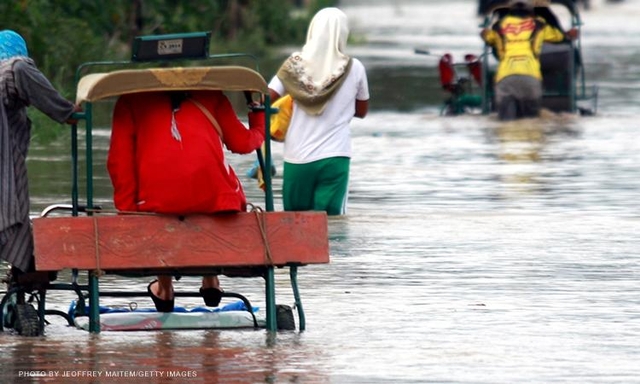
Leachon said local governments and the Office of Civil Defense should also prepare to evacuate residents from flood-prone areas. Unlike the previous years, officials will face the challenge of ensuring people observe protocols against coronavirus such as social distancing.
“Pag bumaha pa (If it floods) they will be brought to the evacuation centers and then this will nullify the primary case of social distancing,” Leachon said. “They should prepare saan ievacuate ito, isolation and quarantine areas of COVID patients.”
Office of Civil Defense spokesperson Mark Timbal said there are already designated evacuated centers in times of emergency.
They have also issued guidelines to local government units to house evacuated citizens at a different facility.
“Hindi po pwede imix ang displaced sa quarantined persons (We can’t mix the displaced with quarantined persons),” Timbal told CNN Philippines in a test message. “Local government units will apply disinfection, distancing and monitoring measures.”
He added there are alternative places for evacuated residents in case the local government used an evacuation facility for COVID-19 patients like covered courts, multipurpose halls, and school gymnasiums.
“At this point po, the procedures remain as is however, in view of the COVID-19, these procedures will incorporate social distancing measures,” Timbal said.