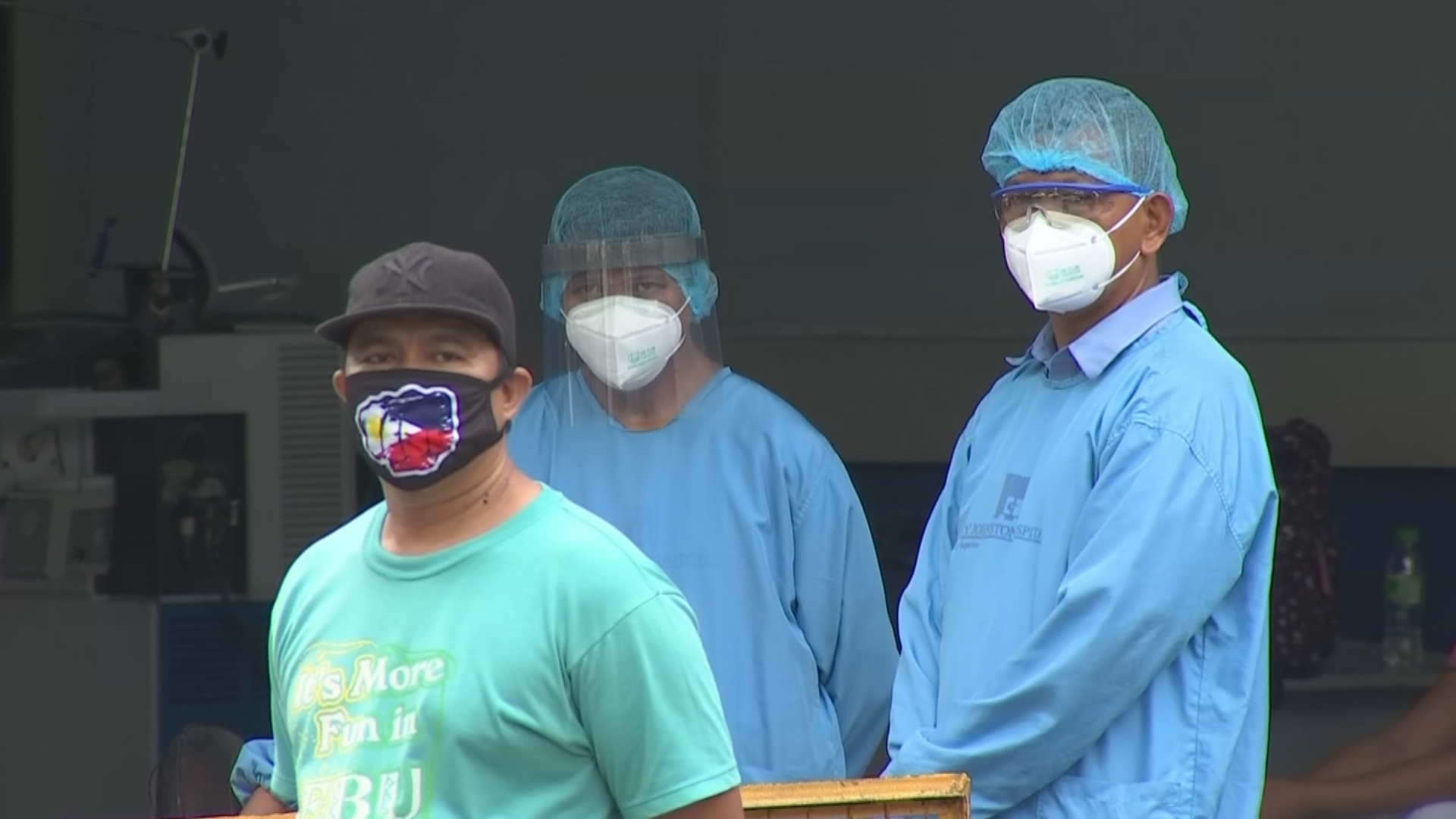

Metro Manila (CNN Philippines, April 23) — A health official believes the shortage of personal protective equipment or PPE is not the reason why the Philippines has over 1,000 healthcare workers infected with COVID-19.
Health spokesperson Ma. Rosario Vergeire on Thursday said, when the number of COVID-19 cases in the country was starting to rise, officials attributed the increasing number of infected medical workers to their interaction with patients who did not fully disclose their health status and travel history.
But she said it has since shifted.
The health official said medical frontliners’ exposure to their own communities after their work shifts — not the lack of protective gear — is seen as the new culprit for the worrisome infection rate among healthcare workers.
“Sa kalaunan naman nakikita natin na it’s not really PPEs eh. It’s something like when they go home and then they go back to work and then they get infections outside of their workplaces,” she said in a virtual press briefing.
[Translation: Later, we saw that it’s not the lack of PPE. They get infections outside their workplaces, when they go home and they go back to work.]
She cited the case of the encoder at the Research Institute from Tropical Medicine who contracted the disease from the employee’s own community.
The Health official dismissed reports that the lack of protective gear led to 1,062 medical frontliners contracting the highly-contagious disease that is spread through droplets.
“I don’t think any doctor really would treat a patient without PPE. Doon ako nagtataka sa mga balita na iyan although alam nating may kakulangan, pero hindi talaga para sabihin natin na talaga ni-risk nila, ginawa ang pasyente na wala silang suot (na PPE),” Vergeire added.
[Translation: I don’t think an doctor would treat a patient without PPE. I am baffled with the reports. We know there is a shortage of PPE, but it’s not enough to say that they are taking a risk and treating patients without any PPE.]
Members of the medical community have long complained of the lack of PPE to protect them from contracting the virus. Some resorted to using plastics and other makeshift coveralls. They have made several appeals to the Health Department and the public to help them receive proper protection. The government has since ordered one million sets of PPE which have been arriving in batches over the past weeks.
Asked about the government’s response to rising infections among medical frontliners, Malacañang said the government is considering the recommendation of Chinese doctors who recently visited Manila to address the issue.
“Talagang nababahala ang gobyerno dahil kung tuluyang magkakasakit ang frontliners natin eh sino ang mag-aalaga sa mga magkakasakit sa atin? [The government is really worred because if our frontliners get sick, who will take care of future patients?],” Roque said in a Thursday briefing, adding that additional supplies of protective gear will be provided to hospitals nationwide.
He added that the implementation of infection protocols will also be tightened. Roque said that the Inter-Agency Task Force for Emerging Infectious Diseases also ordered the Department of Tourism to identify hotels near hospitals and healthcare facilities which can serve as the temporary home of health workers on duty. Secretary Bernadette Romulo-Puyat has been told to submit a list of properties which may be tapped for this.
The World Health Organization (WHO) sounded the alarm on the “worrisome” number of healthcare workers in the Philippines who have been infected with COVID-19, underscoring the importance of proper protective gear for frontliners.
WHO-Western Pacific Region COVID-19 Incident manager Dr. Abdi Mahamud said the WHO is looking at the possibilities that the high infection rate among healthcare workers in the Philippines is either due to the shortage of personal protective gear, its improper use, or the number of cases overwhelming the healthcare system.
Vergeire said DOH is eyeing housing healthcare workers in boarding places to avoid getting the infection in their homes or during their travel to work.
She also said one other possible reason for the high number of cases is the long shifts of healthcare workers. She cited the report of Chinese medical experts who observed Philippines’ healthcare system.
RELATED: ‘Understaffed’ PH health workers, frontliners continue to man defense lines
“Isa sa kanilang rekomendasyon that we should be able to shorten the shiftings of our workers because physiologically mas makakapagpahinga, mas mataas ang resistensya nila, mas hindi prone mahawa. Pangalawa, less exposure to the disease, naso-shorten ang time na exposed sila. Ito rin ay maganda para ma-cut ang risk of transmission sa ospital,” she said.
[Translation: Among their recommendations is to shorten the shifts so they can rest and take care of their immune system. Second, it lessens their exposure because they spend shorter time at work. This also works to cut the risk of transmission in the hospital.]
The number of infected healthcare workers has risen to 1,062 or nearly 19 percent of the total number of cases in the country. They include 422 doctors, 386 nurses, 30 medical technologists, 21 radiological technologists, 51 nursing assistants and 152 other medical personnel such as administrative staff and barangay health workers. Of the number, 26 are dead, including 19 doctors.
The Philippines now has 6,981 cases of COVID-19. The country has also been seeing a rise in the number or recoveries, which is now at 722. The death toll has risen to 462.
READ: DOH purchases ₱1.8 billion worth of PPE for frontline health workers