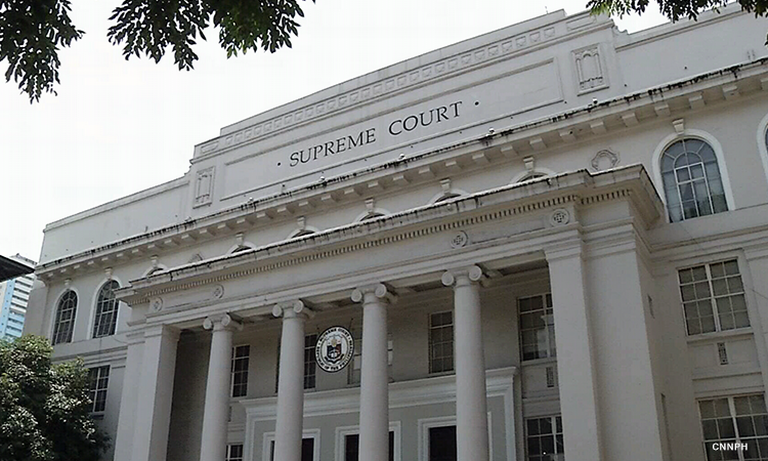

Metro Manila (CNN Philippines, April 1) — The Supreme Court will allow people to file charges and complaints online while the country is under a state of public health emergency.
In an administrative circular signed Tuesday, Chief Justice Diosdado Peralta said “criminal complaints, information, together with supporting documents, may be filed through email” before the lower courts.
Peralta said the judge on duty should decide whether or not to dismiss the complaint or resolution of a prosecutor case within three days from the filing of the legal papers.
The chief magistrate said an accused may also apply for bail via email if the judge finds probable cause to arrest he/she/them.
“The initial online submission of the requirements for bail may also be availed of by an accused who has been charged before the court prior to this start of this public health emergency period,” Peralta added.
The Office of the Court Administrator is in charge of monitoring these new directives, he said.
Peralta also ordered the Office of the Court Administrator to issue the necessary guidelines to properly implement his directive by Friday.
This is another precautionary measure taken by the high tribunal against the viral disease. It aims to “further limit the movement” of court users, court personnel and judges to slow the spread of the coronavirus disease.
Peralta earlier ordered the “physical” closure of courts across the country to minimize physical contact, which experts regard as the culprit in the rising number of COVID-19 infections. Only judges and staff will go to the court to attend to matters deemed urgent.
The country now has 2,084 confirmed cases of COVID-19 after the Department of Health announced 538 new patients on Tuesday.
President Rodrigo Duterte placed the Philippines under a state of public health emergency on March 8 after it was confirmed the COVID-19 has spread in local communities. The proclamation remains in effect until it is lifted by the President.
Duterte has also imposed a stay-at-home order for people in Luzon from March 17 to April 13, with the government putting up checkpoints and restricting non-essential travel to contain the spread of COVID-19.
On March 23, the Senate also approved a bill declaring the existence of a national emergency and granting Duterte additional powers to address the COVID-19 crisis.