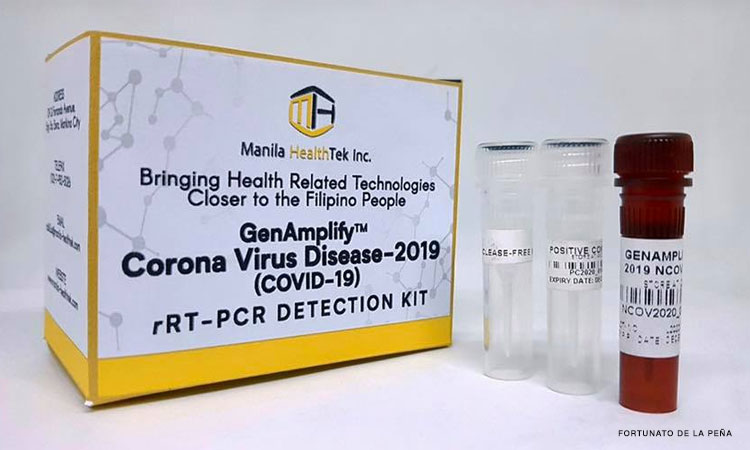

Metro Manila (CNN Philippines, April 1) — The Department of Science and Technology has allocated ₱53.2 million for the production of novel coronavirus test kits developed by scientists from the University of the Philippines-National Institutes of Health, the Inter-Agency Task Force for the Management of Emerging Infectious Diseases said Wednesday.
The law declaring the existence of a national emergency arising from COVID-19 and granting President Rodrigo Duterte additional powers to address the COVID-19 crisis made the allocation possible, the task force’s spokesperson Karlo Nograles said in a televised briefing.
Section 4 of the Bayanihan to Heal as One Act authorizes President Rodrigo Duterte to “expedite and streamline the accreditation of testing kits and facilitate prompt testing by public and designated private institutions of PUIs (patients under investigation) and PUMs (persons under monitoring), and the compulsory and immediate isolation and treatment of patients.”
Hospitals known for their expertise in treating infectious diseases are likely to finish validating the UP-designed detection kits, on April 1, Wednesday.
The field test is a pre-condition set by the Food and Drug Administration before it allows manufacturer Manila HealthTek Inc. to commercially sell its test kits. This clinical trial aims to make sure the kits yield accurate results.
DOST Secretary Fortunato de la Peña said in a statement earlier this week the Food and Drug Administration is expected to approve the kits for commercial use by Friday.
He said a certain number of DOST-funded kits, which could perform 26,000 tests, will be distributed for field implementation from April 4 to 25 to Philippine General Hospital in Manila, Makati Medical Center in Makati City, The Medical City in Pasig in Vicente Sotto Memorial Medical Center in Cebu City Southern Philippines Medical Center in Davao City and Baguio General Hospital in Benguet.
The kit producer previously said it could create testing kits that can accommodate up to 120,000 tests, according to de la Peña. The test kit costs ₱1,300 each, cheaper than the ones worth about ₱8,000 currently used in hospitals.