
Metro Manila (CNN Philippines, March 23) — As the Duterte government scrambles for a quick formula to solve the public health crisis and save the economy, a prominent name from the Great Depression era reemerges: John Maynard Keynes.
What kind of emergency response the Philippine government must take has given rise to a debate.
On one side are seven economists from the University of the Philippines seeking a mammoth P300-billion “social insurance package,” an over ten-fold increase from the P27-billion stimulus package earlier announced by the Duterte administration.
These seven experts argued in a position paper released late Sunday: “[I]t makes little sense to speak of a fiscal stimulus package, an unfortunate choice of words. For in times like these, even Keynes must sit in quarantine.”
On the other side of the debate are central bankers who say there is still wisdom in “Keynesian economics”, or so-called “depression economics”.
Keynes was a British economist who survived the 1930s Great Depression and developed theories that mainly focused on using fiscal and monetary policy to manage aggregate demand to stem economic slumps.
Keynes rejected the idea that the economy would naturally revert to a state of equilibrium and instead argued “that once an economic downturn sets in, for whatever reason, the fear and gloom that it engenders among businesses and investors will tend to become self-fulfilling and can lead to a sustained period of depressed economic activity and unemployment,” the Investopedia writes.
Keynes’ recommendation then was for governments to take the deficit spending route to boost consumption, stimulate demand and pull the economy out of depression.
The Duterte government is doing that, pumping the economy with P27 billion in fresh funds to lift the tourism industry, lend to ailing small businesses and give subsidies to informal workers who lost their jobs as companies closed.
A much larger package is on its way.
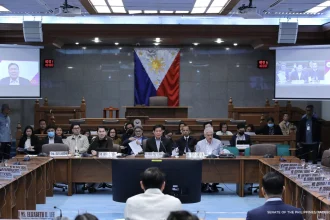
A bill granting President Rodrigo Duterte additional powers – including a realignment of funding in the 2020 budget and allocation of funds for the country’s COVID-19 response – has hurdled house committee level on Monday. It is tabled for plenary debate.
But in their position paper, the seven economists have categorically labeled the fiscal stimulus as “wrong”.
Dismissing Keynesian economics, they argued that the “success of the plan should not be evaluated on the basis of whether it stimulated aggregate demand; that is not the objective.”
“[W]hat we are advocating is a social insurance package… the question to be asked is, ‘Were we able to minimize the economic hardship of those who were forced to retreat for the collective good?’”
The seven economists are Emmanuel S. De Dios, Alfredo R. Paloyo, Cielo D. Magno, Karl L. Jandoc, Laarni C. Escresa, Ma. Christina F. Epetia and Maria Socorro G. Bautista.
They proposed more cash dole-outs to poor households identified under the Pantawid Pamilyang Pilipino Program (4Ps), a moratorium on foreclosures and payments of utility and credit card bills, subsidies to farmers, and furlough insurance to the jobless, among others.
For businesses, their recommendation ranged from emergency loans to tax holidays to rescue packages for industries hardest hit, including airlines.
The quid pro quo: Businesses must not lay off workers.
“The option of a total bailout can be placed on the table, with a national government equity stake,” the position paper read.
“KEYNES WOULD HAVE SAID YES”
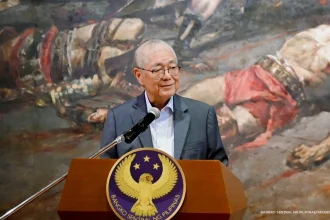
Former Bangko Sentral ng Pilipinas Deputy Governor Diwa C. Guinigundo, in his March 19 column on Manila Bulletin, is one who supports fiscal spending but with focus on public health, flooding the health sector with all resources to fight the pandemic – more personnel, equipment and testing kits.
Asked on Monday for his comment on the position paper, the former central banker said: “It’s a good paper focused on providing some ideas on social protection and economic recovery on account of the corona virus.”
“[W]hile it argues fiscal policy is ‘wrong’, it stands to reason that what the Government can do is essentially critical. Public spending should shift from infra… to ensuring our health facilities and appropriate IT infrastructure are in place.”
“Even Keynes would have rallied the Government to spend on health,” Mr. Guinigundo said.
Social protection packages in a pandemic crisis like this do not have to be inconsistent with the intent of fiscal policy.
“You spend just the same. Keynes would have said yes,” the central banker added.
The government’s emergency bill also finds backing from the country’s largest business groups but with a note of caution.
Businessman-lawyer Perry L. Pe, former president of the Management Association of the Philippines (MAP), said in a March 23 Viber message: “We need to arm the government with tools to do budget realignment, savings reallocation and other extra funds usage in order to get the economic fiscal stimulus going.”
“My only caution is not to overreact and do deficit spending beyond our budget capabilities. Most of these financial package are really for our working force.”
Following Monday’s deliberation in Congress, MAP together with the Makati Business Club as well as several industry groups – bankers, exporters, retailers, call centers and business chambers – issued a joint statement urging Congress to pass a supplemental budget.
“We recommend that any law that is passed by Congress should be consistent with our constitutional and legal principles, and not be overly broad and over-reaching — in particular with realignment and reallocation of government and GOCC funds that should consider the constitutional guidelines laid down by the Supreme Court, and take-over of private enterprises — in order to avoid constitutional challenges that would delay implementation thereof,” the March 23 joint statement said.
Big businesses also sought a stimulus package for their small peers to “help them pay workers to remain quarantined and, when the pandemic is under control, to rehire and resume normal operations.”
And while the call of the seven economists for companies not to fire staff has yet to be heeded, the elephant in the room stays: It’s an uncertain time for the job market.