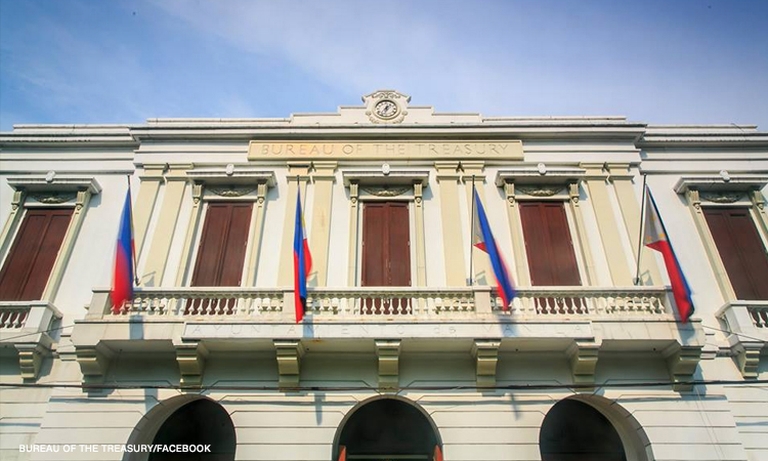

Metro Manila (CNN Philippines, January 29) — Government debt soared to a fresh high in 2019 as authorities borrowed more to fund local projects, the Bureau of the Treasury said Wednesday.
The Philippines’ outstanding debt totaled ₱7.73 trillion by end-December, 6 percent higher than the ₱7.29-trillion level tallied in 2018. The amount also picked up from the ₱7.71-trillion debt stock recorded in November, the Treasury said in a statement.
The Philippine economy expanded by 5.9 percent last year, slower than the 6-6.5 percent goal set by the Duterte administration. The Philippines is now an ₱18.6-trillion economy, according to the Philippine Statistics Authority.
Two-thirds, or ₱5.13 trillion, of the total outstanding loans at end-2019 was owed to domestic investors. This is 7.3 percent higher than what was borrowed onshore the previous year.
The rest, worth ₱2.6 trillion, was financed from foreign investors, which likewise grew by 3.5 percent year-on-year.
The Treasury said the increase is due to new debt papers offered to investors during the year. The peso fared better against the dollar in December 2019, averaging ₱50.802 to $1 versus the ₱52.563 rate in December 2018.
However, the Treasury said the debt stock stood more manageable relative to the size of the Philippine economy.
The debt-to-GDP ratio went down from 41.9 percent to 41.5 percent last year, lower than the 41.7 percent share earlier projected.
“The improved debt-to-GDP ratio is a result of prudent cash and debt management backed by steady economic growth,” the Treasury said.
As a developing economy, the Philippines borrows from both local and foreign sources to fund new programs and projects and manage debt payment periods.
RELATED: Feeling lucky? Treasury launches ‘premyo bonds’ that double as raffle tickets
Bigger economies have larger debt-to-GDP ratios like the United States (108 percent), China (60.9 percent), and Japan (237.6 percent), according to the October 2019 World Economic Outlook of the International Monetary Fund.
Of the country’s unpaid dues, the country set asside ₱488.75 billion for continuing payments in December. This is slightly higher than the amount set aside for guaranteed obligations by the end of 2018.