
“NFA will increase the country’s emergency buffer stock from 15 days to 30 days by buying more palay from the rice farmers,” Dar said.
Around 600,000 affected farmers tilling less than a hectare of farmland will also each receive ₱5,000 in cash assistance from the government in 2020 and 2021, he said.
Dar made the statement a day after his meeting with Duterte, Executive Secretary Salvador Medialdea and Finance chief Carlos Dominguez III on Wednesday, regarding the President’s order to suspend the import policy in a bid to help farmers who are suffering from historic low prices of unhusked rice.
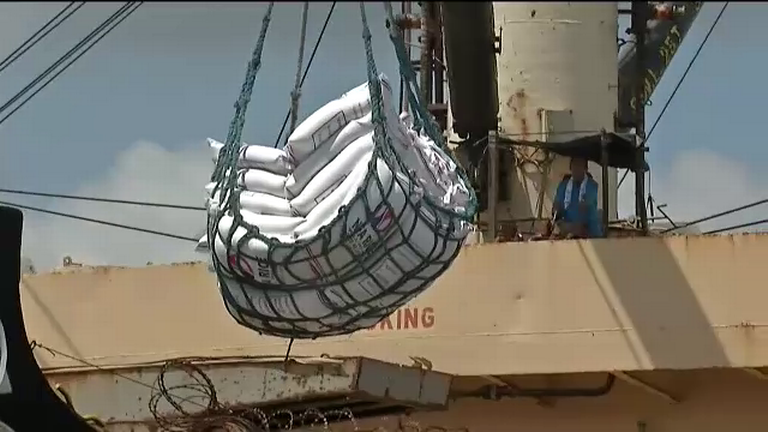
Metro Manila (CNN Philippines, November 21) – Contrary to President Rodrigo Duterte’s verbal order, Agriculture chief William Dar on Thursday said that rice importation will not be suspended, at least during the harvest season.
“The DA through the Bureau of Plant and Industry, will strictly implement the issuance of sanitary and phytosanitary import clearance (SPSIC). For instance, the agency will conduct pre-inspection at the point of origin of imported rice stock to ensure rice quality and safety for consumers and at the same time protect the spread of crop pests and diseases.”
Dar, in a briefing Thursday, said that the Bureau of Plant Industry will just be much stricter in implementing the issuance of import clearances to traders to ascertain that only good quality would enter the country.
Asked if this means that rice imports would go on as long as importers comply with requirements, the Agriculture chief said, “Yun po ang ibig sabihin.”
[Translation: That is what that means.]
The official added that the National Food Authority is also directed to buy more palay from farmers who are suffering from historic low prices of unhusked rice (palay).
He added that the NFA is also ordered to sell regular well-milled rice at an average of 20,000 or more bags a day. One bag is equivalent to 50 kilos.
A farmers’ group previously questioned the Duterte’s recent directive, saying there is no legal basis to do so.
The rice trade liberalization law authorizes the President to change import duties as long as they are allowable under international agreements to which the Philippines is a signatory, but it does not state whether a chief executive could stop rice importation.