
Metro Manila (CNN Philippines, November 18) — The Philippines took the right step in lifting import limits on cheap rice, the International Monetary Fund said amid calls to scrap the law as local farmers incur losses.
The global monetary authority said the country is better off with rice tariffication, which replaced import quotas for the staple with tariffs which each importer must pay to bring in cheap rice from abroad.
“We think that the rice tariffication was a major step forward, in a sense an overdue step,” IMF Mission Chief Thomas Helbling said in a media briefing Monday.
Helbling led a team from Washington who visited Manila; Clark, Pampanga; and the newly-built New Clark City in Tarlac for the IMF’s annual health check on the Philippine economy.
“I think it helps in reducing the price for the very important food staple, helping the broad population. We would also note that of course, rice farmers may suffer from this but the government has instituted income support for protecting farmers,” Helbling added. “Overall, for economic welfare, we see it as a major step forward.”
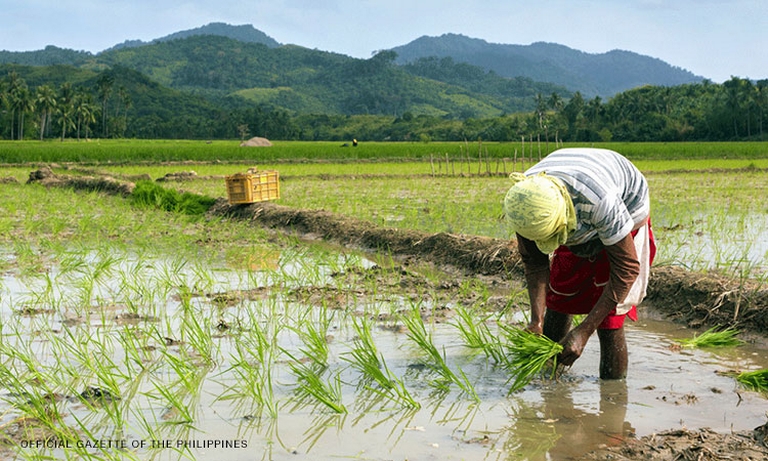
The rice tarrification law meant to reduce the market price of rice by easing import restrictions on the staple, instead imposing importers to pay duties to the government for inbound crop shipments. Duties paid are then collated for the ₱10-billion Rice Competitiveness Enhancement Fund to aid local farmers affected by the influx of cheap rice imports. Despite this, local farmers have lamented the sharp fall in palay (rice paddy) prices, which has slashed their profits to the lowest in nearly a decade.
READ: Farmers may incur losses of ₱140B by yearend due to rice imports, group says
For the Washington-based group, rice tariffication tempered price surges seen in 2018. Inflation is now expected to drop to end at 1.6 percent by December against a 2-4 percent target. In 2018, prices surged by an average of 5.2 percent.
The benign pace of price increases should continue until next year, with the IMF projecting a 3 percent rate.
READ: Customs collects ₱5.9B tariffs from imported rice
Benign inflation coupled with a “substantial” increase in government spending would drive faster economic growth for the rest of the year, coming from a soft start from January to June. Still, the IMF maintained its growth projection at 5.7 percent, meaning the Philippines would miss its 6-7 growth goal for 2019.
“We see the 5.7 percent as a very strong forecast, in the sense that growth was relatively weak in the first half of the year,” the IMF official said. This assumes that spending, particularly on infrastructure, would “accelerate further.”
The economy would have to expand by 6.7 percent between October and December to hit a 6 percent average, rsulting from the delayed national budget and the 45-day election ban on public works.
The IMF sees 2020 growth at 6.3 percent — better than this year, but still short of the state’s 6.5-7.5 percent target.
On revisions to the government’s priority infrastructure projects, the IMF said the pipeline remains “strong” despite shelving big-ticket items and adding unsolicited proposals shouldered by big businesses.
“You have to be pragmatic and use the tools you have. Sometimes, private sector participation can help, but clearly the government needs to increase its capacity,” Helbling said.
CNN Philippines Correspondent Sandra Zialcita contributed to this report.