
Manila (CNN Philippines Life) — Educational programming for children in the Philippines isn’t quite like how it used to be. No group of TV personalities was more iconic to Filipino children of the 90s than that which included Ernie Baron, Bodjie Pascua, Pong Pagong, and Anatom and Agatom. Ask any 25-year-old who grew up watching local TV to sing the theme to “Sineskwela” and no doubt she will know all the words to this day.
It’s not hard to wax nostalgic thinking about the educational shows of yore. While the American 90s millennial creates “it was so much better back then” starter-pack memes filled with photos of HitClips, Razor Scooters, and Trapper Keepers, mine would feature something more along the lines of Giselle Sanchez as a science mentor in “Sineskwela,” commercials for increasing my word power, and a “5 and Up” membership card that is as lost in my bodega as it is in the minds of the far younger generation.
It helped that the characters guiding us through these lessons — disguised as entertainment — were vibrant and engaging enough for our attention spans then — not as short as the rapid Google-fied focus that we have now. How could you not listen to what a living and talking punongkahoy had to say in “Sineskwela”?
There was nothing like coming home from school to a merienda of turon and sopas waiting for these shows to come on. It kind of felt like waiting for a stream of an American show to come on in Philippine time now. A fellowship of bimpo-adorned children sat in front of their televisions learning from shows that were in line with what they were learning at school. In some cases, the topics might have even been advanced — but easily digestible from the way they were contextualized for entertainment. It helped that the characters guiding us through these lessons disguised as entertainment were vibrant and engaging enough for our attention spans then — not as short as the rapid Google-fied focus that we have now. How could you not listen to what a living and talking punongkahoy had to say in “Sineskwela,” or watch as kids in “Bayani” travel through time and have a hand in the making of history.
I still remember a lot of things that I learned off of these TV shows. I’m sure a lot of people do, as well, and I’m not a Special Sally flashing my superior memory of bygone TV. And there’s nothing like the stinging feeling of discovering that some of the things you learned from these shows weren’t 100-percent true, after all — but you’re thankful that they stirred in you an unending thirst for facts all the same. One such memory was the joy of first discovering in “Sineskwela” that a Filipino named Agapito Flores was the inventor of the fluorescent lamp. To the young, impressionable Filipino, he would have been Southeast Asia’s answers to Edison. How could you doubt that the innovation was his when it was supposedly named after him? Flores, Florescent? Right? Well, it couldn’t have been more wrong — it was actually an American named Peter Cooper Hewitt who invented the fluorescent lamp that we know today. Agapito Flores’s achievements are now widely contested online, but that doesn’t stop Filipinos from believing in what they want to believe in anyway.
These shows, particularly “Sineskwela,” “ATBP,” and “Epol Apol,” also introduced me to many personalities who had many invaluable contributions to Philippine culture. How would I have ever known about Levi Celerio and his uncanny ability of making sounds out of a leaf apart from all he has done for our music? Shows like these paraded talented Filipinos one after the other and regarded them highly as figures of note, instead of treating them like fillers for a human-interest piece in the nightly news or as part of a listicle on the viral Web. They showed me how Filipinos actually excelled, and they showed me at length — from the concert pianist Cecile Licad to the prima ballerina Lisa Macuja to the martial-arts champion Monsieur del Rosario.
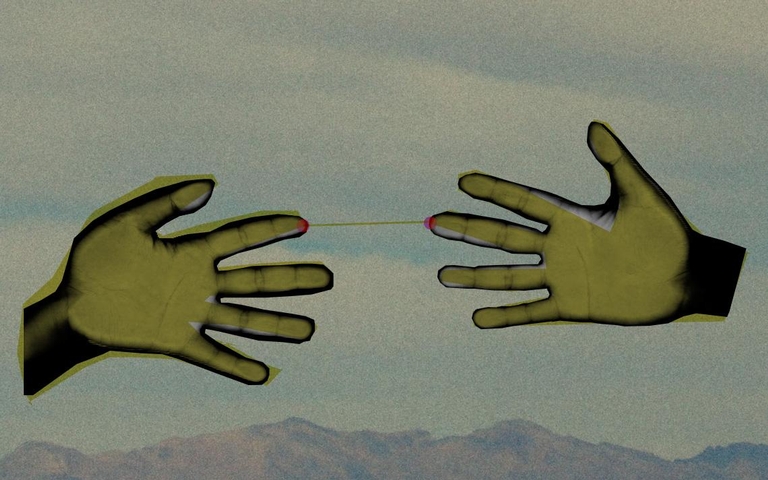
Thanks to an episode of “Math Tinik,” I picked up a fancy party trick and exam helper that has since stuck with me: how to do the multiplication tables from six to 10 using my bare hands. Until now, I’m still pretty amazed by the divine design that allowed the pinky on one hand connected to the middle finger of my other hand to show me that six times eight was 48. And that by simply moving my pinky down a notch to my ring finger I would figure out that six times seven would equal 42.
We may not want to thank the 90s for many things, but we should at least tip our hats off to the endless peddling of knowledge, information, and intelligence that the generation provided. Imagine, we all switched from one variety of salt to the other because the Department of Health at the time told us that iodized salt helped keep our kids smarter, more listo. In much the same way, parents at the time were sold premium formula by companies who would brand exceptional children as “Promil Kids,” making personalities like CJ de Silva and Shaira Luna household names before they even reached their teens. The tail end of the generation even saw the creation of a whole channel dedicated to educational TV shows, aptly called Knowledge Channel.
Thanks to an episode of “Math Tinik,” I picked up a fancy party trick and exam helper that has since stuck with me: how to do the multiplication tables from six to 10 using my bare hands.
Things have changed. We don’t see as much of these shows, but hear me out: It might not be the fault of the networks completely. There’s the disruptor that is the internet. There’s the growth of the Google generation. There’s the rise of individualized entertainment through mobile apps, video streaming, and social media. Children may have also gotten a lot busier than they used to be. Longer school hours, extended after-school activities, and special out-of-school learning programs may be taking a lot more of a child’s time. There is no singular, compelling reason anymore for kids to sit in front of a TV and be “edutained.”
And for that reason, that’s probably where the magic of all these shows came from, and why they’ve gone. They were able to get hundreds of thousands of kids to sit and enjoy learning, even if it had only been for an hour of their day. While they now sit in a collective memory alongside playing Chinese garter and getting excited about Twin Popsies, these shows have undoubtedly left a lasting impression on those who were fortunate enough to catch them.