
Metro Manila (CNN Philippines, June 21) — Foreign investors pulled out their money from the local stock market in May as the tariff war between United States and China escalated further.
Foreign portfolio investments, also called “hot money” given their flighty nature, saw more outflows from the Philippines than what went in last May, data from the Bangko Sentral ng Pilipinas (BSP) showed.
May saw $749.84 million in net outflows, over three times more than the net $206.35 million in withdrawn in May 2018. The May net outflow was also bigger than April’s $298.83 million, and sustained net withdrawals since March.
Aggregate placements withdrawn in May totalled nearly $2 billion, outpacing capital inflows at $1.2 billion.
Investment withdrawals from shares of listed companies on the Philippine Stock Exchange reached $508 million, while pullout from placements on government-issued debt papers reached $241 million. Bets on other instruments also registered net outflows, the BSP said.
“[I]nvestors reacted to the renewed trade tensions between the U.S. and China,” the Bangko Sentral said in a statement. It noted that the US remained a favored safe haven for investors, as 81.5 percent of the outflows were invested there.
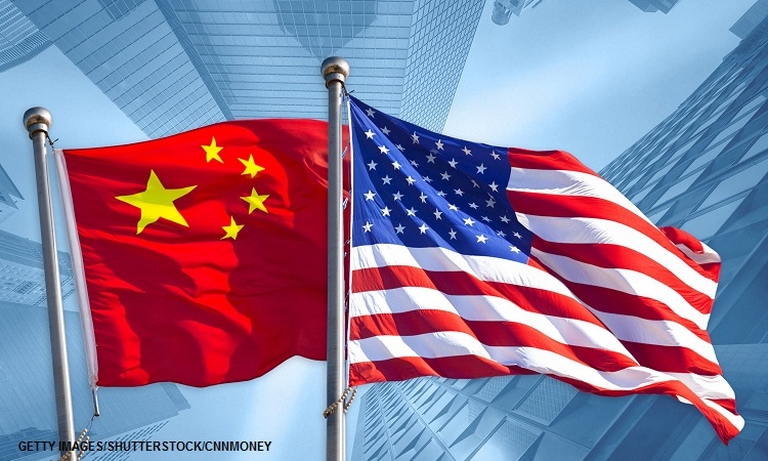
U.S. and Chinese trade negotiators again failed to settle differences during a fresh round of talks in May. Without a compromise, the US again slapped duties on $200 billion worth of Chinese exports, to which Beijing retaliated by raising tariffs on $60 billion worth of U.S. goods from June 1. In the same month, the Trump administration included Chinese tech firm Huawei in its blacklist, delivering a $30-billion blow to the gadget maker’s expected revenues over the next few years.
READ: Here’s the worst-case scenario for the US-China trade war
The May investment inflows, said Bangko Sentral, actually improved by a fourth compared to April, which was attributed to a slower April inflation of 3 percent, as well as the phased reduction of bank reserves and the peaceful conduct of the May 13 midterm elections.
More than 80 percent of the investments went into shares of stock of listed companies. Foreigners largely preferred investing in holding firms; property companies; banks; food, beverage and tobacco companies; and transportation services firms, the central bank said.
The biggest inflows came from investors in the United Kingdom, the US, Malaysia, Singapore, and Luxembourg.
The May figure brought the five-month hot money tally to a $685.27 million net outflow, which is a reversal of the $813.81 million net inflows in the same period a year before.
This is far from the BSP’s projection of $4 million in hot money net inflows by yearend, according to newly announced forecasts.