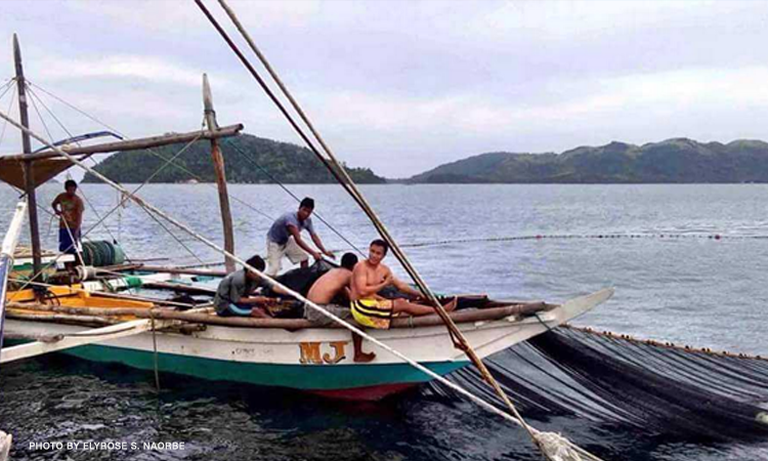

Iloilo City (CNN Philippines, November 3) — The Visayan Sea will be closed to fishing activities starting November 15.
This, after the Bureau of Fisheries and Aquatic Resources (BFAR) Region 6 said it would enforce the yearly three-month fishing ban in the area. Catching, buying/selling fish – including larvae, fry, or young – will be prohibited in the area.
The Visayan Sea, one of the country’s major fishing grounds, is suffering from overfishing.
As part of the ban, the BFAR will prohibit catching sardines, herring, and mackerel – these fish make up one-third of the total fish production of the Visayan Sea.
The ban is a measure to ensure that the Visayas’ fish supply will not be depleted and allow fish to spawn freely.
BFAR Regional Director Remia Aparri urged local government units help to enforce the fishing ban until the February 2018 when the sardine, mackerel, and herring population is restored.
Violators will be charged accordingly under Fisheries Administrative Order No. 167-3 that mandates the annual ban. All violators will be fined with imprisonment of six months and one day to six years, a fine of P6,000 or forfeiture of the catch, and cancellation of fishing permits or licenses.
Meanwhile, the Iloilo provincial government is stepping up its campaign against illegal fishing most especially in the northern part of the province whose waters are shared by the Visayan sea. It is giving patrol boats to seven coastal towns
Provincial Administrator Raul Banias will lead local governments of Barotac Viejo, Dumangas, Ajuy, and Carles as they each receive one patrol boat this month.
Gov. Arthur Defensor Sr. revealed that most of the illegal fishers that Bantay Dagat apprehended were from neighboring provinces like Masbate, Cebu, Negros Occidental, and Capiz.
Villar looks into sustainable fishing
Senator Cynthia Villar, meanwhile, is looking to review a plan to present the Philippine seas from becoming a “virtual desert.
“We would like to avoid the dreaded scenario of our oceans turning into virtual deserts by 2050,” said Villar, chairperson of the Senate Agriculture and Food committee.
Villar said she wants to review the draft plan and various inputs and recommendations of industry players on the National Tuna Management Plan.
“The ultimate objective of any plan for the industry is to promote the effective conservation, management and equitable use of tuna resources in the Philippines for its sustainable development,” she added.
She underscored that sustainability is the key word and one of the most important considerations in all efforts and actions for the further growth, development, and future of the tuna industry.