
Metro Manila (CNN Philippines, July 20) — Passengers on Philippine Airlines (PAL) flights bound for the U.S. must hand over portable electronic devices larger than a smartphone for additional airport screening.
The directive, which took effect July 19 and will be in place until June 30, 2018, “is in line with the new set of security directives issued by the United States Department of Homeland Security requiring airlines flying from last point of departure to the US,” PAL said in a statement issued Wednesday.
“Electronic devices that exceed the size limit must be surrendered by passengers to the airline for additional screening at the Redundancy Screening Checkpoint,” the airline added.
However, the directive exempts “necessary medical devices.”
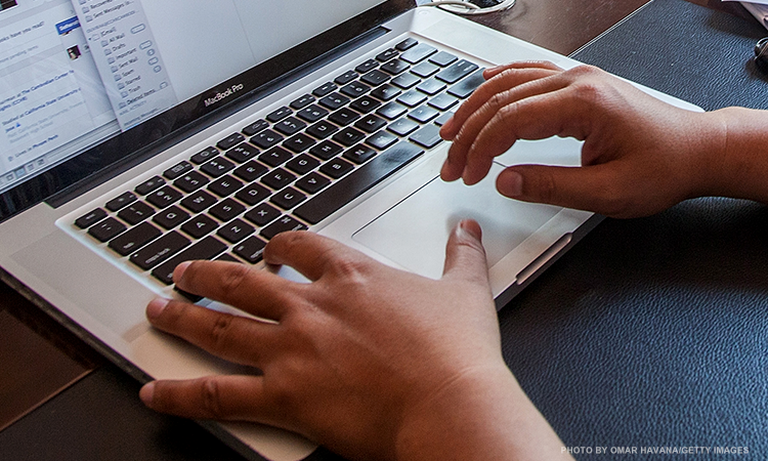
The U.S. Homeland Security Department website lists laptops, tablets, e-Readers, cameras, portable DVD players, electronic game units larger than a smartphone and travel printers/scanners as some of the electronic devices that are subject to additional screening.
“PAL urges its passengers bound for the US from Manila and Vancouver to yield to these inspection requirements, in compliance with security regulations,” the country’s flag carrier said.
PAL operates flights to San Francisco, Los Angeles, Honolulu and New York.
In March 2017, the U.S. Department of Homeland Security tightened its rules on 10 airports from the Middle East and North Africa, prohibiting electronic devices larger than a smartphone inside carry-on luggage.
As of July 14, this ban applies to flights to the U.S. originating from four international airports — Riyadh and Jeddah in Saudi Arabia, Casablanca in Morocco and Cairo in Egypt.
“Evaluated intelligence indicates that terrorist groups continue to target commercial aviation and are aggressively pursuing innovative methods to undertake their attacks, to include smuggling explosive devices in various consumer items,” the DHS said.