
Metro Manila (CNN Philippines, July 4) — More than a year into President Rodrigo Duterte’s war on drugs, the Philippine Drug Enforcement Agency (PDEA) says of the 24,000 barangays in the country which had been affected by drugs, 15% or 3,600 are now drug-free.
It’s a big break, but they admit a lot still has to be done.
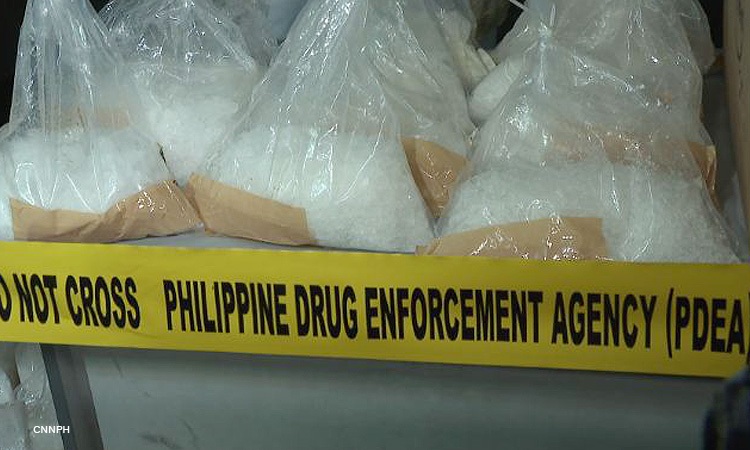
This Tuesday morning, drug enforcement agents destroyed 44 kilos of illegal drugs worth P134 million pesos.
The police confiscated the packs of shabu in three police operations in November last year.
According to Belen Banog, laboratory service director of PDEA, “Ang end product po nito is actually ashes. After ng destruction, it will be tested by our chemists if it is really destroyed.”
[Translation: Ashes are the end product of the process. After the destruction, it will be tested by our chemists if it is really destroyed.]
But authorities admit this is just the tip of the iceberg.
While more than half of all 42,000 barangays in the Philippines are considered drug-free, some 20,000 are still infiltrated by drugs.
PDEA spokesperson Derrick Carreon says a barangay can automatically be considered drug-affected as long as there is one user identified.
He said, “Hindi po pupwede na supply reduction lamang tayo. We have to address the demand… because otherwise hangga’t mayroong tumatangkilik sa industriya ng iligal na droga, hindi mawawala ang nagluluto o nagpaparating ng droga.”
[Translation: We cannot just act on supply reduction. We have to address the demand because as long as there are people who use illegal drugs, the people who make and transport it will not go away.]
Despite the uphill battle, Carreon said they have accomplished more than the previous administration – almost doubling anti-drug operations from 36,466 from July 2015 – June 2016, to 64,397 from July 2016 – June 2017.
The amount of shabu seized from July 2015 – June 2016 rose from 820 kilos to 2,446 kilos between July 2016 – June 2017.
Carreon said, “We have so far, based on figures, reduced at least 15 percent of drug supply and 33 percent in terms of market for dangerous drugs.”
Authorities aim to reduce the number of affected barangays in the country to less than 30% by 2020.