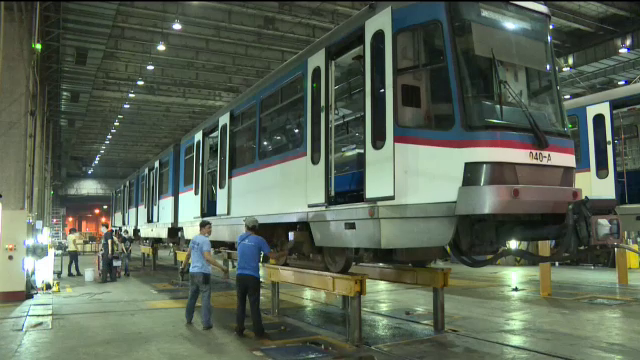

Metro Manila (CNN Philippines, July 3) — Despite a new maintenance provider, the Metro Rail Transit Line 3 (MRT-3) is experiencing more problems than it has before, according to the Commission on Audit (CoA).
In a report released Monday, CoA said there was an increase in MRT glitches despite Busan Transport Corporation taking over for maintenance issues in January 2016.
According to the June 23 report, incidents of passenger unloading due to technical problems have almost tripled, from 222 in 2014 to 586 in 2016.
Service interruption incidents due to broken rails or system failure also went up to 63 in 2016 from 50 in 2014.
Train removals, or the pullout of the train from the daily run, also increased by almost 20% –from 2,186 in 2016 to 2,619 in 2014.
The report also said Busan had yet to complete the general overhauling of a single Light Rail Vehicle (LRV), despite a deadline to overhaul at least 13 LRVs by end of 2016.
But CoA also said Busan had cited the lack of original equipment and spare parts as factors hampering its work.
The government pays Busan P586 million annually for MRT repairs.
CoA also called out the Department of Transportation (DOTr) for its failure to operate 48 new train coaches purchased by former Transport secretary Jun Abaya, worth P3.7 billion.
The train coaches from Dalian Locomotive and Rolling Stock Co. of China would remain unusable because of the lack of power supply.
According to DOTr Secretary Arthur Tugade, they would decide soon if they would continue or terminate the contract with Busan because of the glitches.
“Bumubuo kami ng tinatawag na courses of action ngayon upang ma-address-an, not only ‘yung sistemang ipinatayo, but ‘yung operasyon at maintenance na pang-araw-araw ginagawa at ‘yung mga taong pang-araw-araw na nanunungkulan diyan,” Tugade said during the Philippine Transport Forum in Mandaluyong Monday.
[Translation: We’re making courses of action to address not only the train system that was built, but also the daily operations and maintenance, as well as the personnel who manage the system daily.]
Busan has paid P30 million in penalty fees, but CoA said this would not compensate for the adverse impact of frequent glitches on the safety of commuters.
The DOTr is also looking at establishing a Philippine Institute for Railways with the help of the Japan International Cooperation Agency for those who want to work in the railways sector of transportation.
Hybrid PPPs
President Rodrigo Duterte’s economic managers also defended the administration’s “Build, Build, Build” program which has 75 flagship infrastructure projects to help ease traffic in the Philippines.
Some criticized the hybrid public-partnership partnership (PPP) programs of the government, saying the programs lacked transparency.
Hybrid PPPs are projects first built by the government, but the operation and maintenance expenses will be shouldered by private entities.
Budget Secretary Ben Diokno explained they did not abandon the original PPP programs pioneered by the Aquino administration.
“We have not totally abandoned the PPP efforts except that we are pushing that public private partnership towards the end. We want to build the facilities first,” Diokno said in the forum.
The PPP program, launched in 2011 under President Benigno Aquino’s terms, aims to get government and business to share the costs and the risks that come with long-term, big-ticket infrastructure projects.
However, there have only been 12 projects rolled out under Aquino’s administration. The 53 other projects in the pipeline during Aquino’s term have been delayed due to questions about their terms, others have been cancelled completely because of problems with bidding and awarding.