
Metro Manila (CNN Philippines) — The military believes there’s no compelling reason to declare martial law even with the rising number of deaths in the war on drugs and the threat of terrorism.
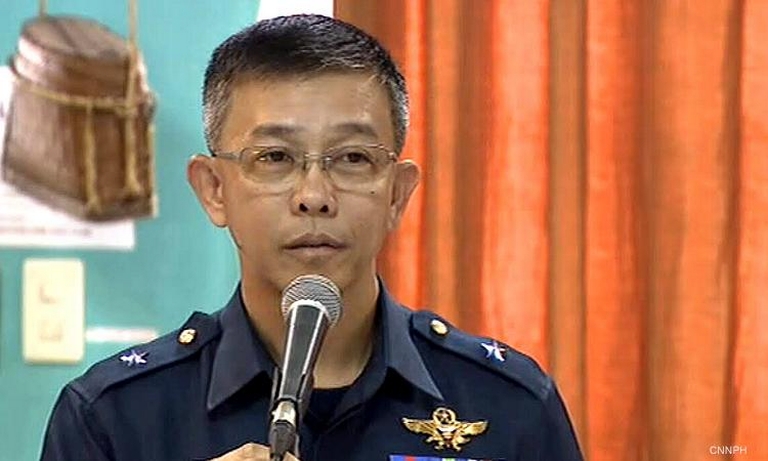
Armed Forces of the Philippines (AFP) spokesperson Brig. Gen. Restituto Padilla told CNN Philippines on Thursday as part of the government, the military will be “ready to go down the road” of martial law if there is a compelling reason and a legal basis to do so.
But even if the situation doesn’t warrant a declaration. he said the killings and drugs are a two-pronged battle that must be fought simultaneously.
“You cannot chose one or the other. It has to be at the same time. The war on drugs is… a threat that is being directed at the future of this country, which is the youth,” Padilla said.
He said the youth should also be protected against terrorism.
“The target of terrorists are the youth because they are open to new ideas,” he added.
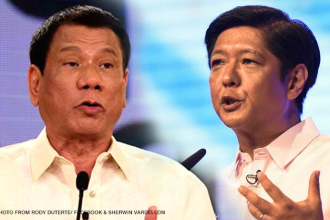
On Wednesday, President Rodrigo Duterte said despite agreeing with the military that there is no compelling reason to declare martial law, he will do so if only “to preserve the country.”
“If I feel as a President that I have to preserve my country, I will declare martial law. Pero kung sabihin lang ninyo na, peace and order ganun, ngayon, tama ang military [If you say peace and order, the military is enough], there is no compelling reason, really,” Duterte said in a speech in Nueva Ecija on Wednesday.
According to the Constitution, the president, as Commander-in-Chief of the armed forces, may place certain parts, or the whole country, under martial law for not more than 60 days, “when public safety requires it.” The Congress and the Supreme Court have the power to cancel or extend the proclamation.
Duterte placed the Philippines under a state of lawlessness through Proclamation 55 in September 4, 2016, following clashes between the military and Abu Sayyaf and an explosion at the Davao City night market. The proclamation is still in place.
Padilla said terrorist groups Mindanao are the main threats, even as the president said they are pledging allegiance to ISIS.
The military official said he hopes current talks between government and Moro rebel groups and with the communists will help address the threat of terrorism.
Read: Government begins formal peace talks with communists
“There is (a peace talk) with the MILF (Moro Islamic Liberation Front)… And currently, at this very moment, there are peace talks ongoing – for another round, in Rome – with the CPP-NPA-NDF (Communist Party of the Philippines-New People’s Army-National Democratic Front),” Padilla said.
Read: Government still in talks with Moro Islamic Liberation Front
Among issues in the third round of peace talks with the CPP-NPA-NDF, said Presidential Adviser on the Peace Process Jesus Dureza, are bilateral ceasefire, release of political prisoners, as well as socio-economic, constitutional and political reforms.
The government resumed negotiations with the NDF in Oslo, Norway in August 2016, hoping to forge a deal to end Asia’s longest running communist insurgency.
Labor Secretary Silvestre Bello III, concurrent chairman of the government peace panel, said Duterte has clear instructions for the government panel: help bring peace to the Filipino people – something that the military welcomes.
“We are looking forward to the end of this discussion and we, in the Armed Forces in particular, are praying that we put some sense into our kababayans [countrymen] from the Left side that it’s about time that we come into an agreement on the joint declaration for the cessation of hostilities,” Padilla said.
He said it has been two months since the last clash after a unilateral ceasefire with the rebels.
Read: Government restores unilateral ceasefire declaration with communist rebels
“Eventually, it is not really the soldiers who benefit out of it but the ordinary citizens, the businessmen, students, families. We look forward to the day when we are able to … sign an agreement that will eventually lead to a long and lasting peace,” he said.