
Metro Manila (CNN Philippines) — The Philippines hopes to borrow at least P25 billion from the Asian Infrastructure Investment Bank (AIIB) after the Senate approved the country’s membership on Monday.
Economic managers are hopeful the AIIB membership will open new sources of funding for the country, helping to bridge an infrastructure gap estimated at P8 trillion.
“We are looking at $300-500 million for the initial year. This is for proposed projects,” Finance Secretary Sonny Dominguez said in a text message on Tuesday.
In turn, he added, the country has to invest $40 million (P2 billion) a year for the next five years to be part of the AIIB.
“We will now work for the release of payment for this year from the budget. Then we can ask for AIIB to send a mission to the country for discussion on high-priority projects prepared by NEDA (National Economic and Development Authority) for AIIB financing,” he said.
Entry into the AIIB comes at a time when the new Duterte administration makes infrastructure the core of its economic agenda. It estimates the country needs to invest about P8 trillion over the next six years to be at par with its Asian neighbors.
NEDA has already approved about 18 big-ticket infrastructure projects, worth P427.5 billion, for this year alone. Many of these will be funded by international lenders.
The projects include:
– the Metro Manila Flood Management (World Bank);
– the Cebu International Container Port (Export-Import Bank of Korea); and
– the Panglao Airport (Japan International Cooperation Agency).
Bangko Sentral ng Pilipinas Governor Amando Tetangco Jr. welcomed the AIIB membership, saying it will allow the country to make up for decades of infrastructure neglect.
“The AIIB can be an alternative source of funding for infrastructure, which is something really needed in the Philippines. We have one of the lowest infrastructure spending-to-GDP (gross domestic product) ratios in the region — and we see the effect of that in the economy,” Tetangco said.
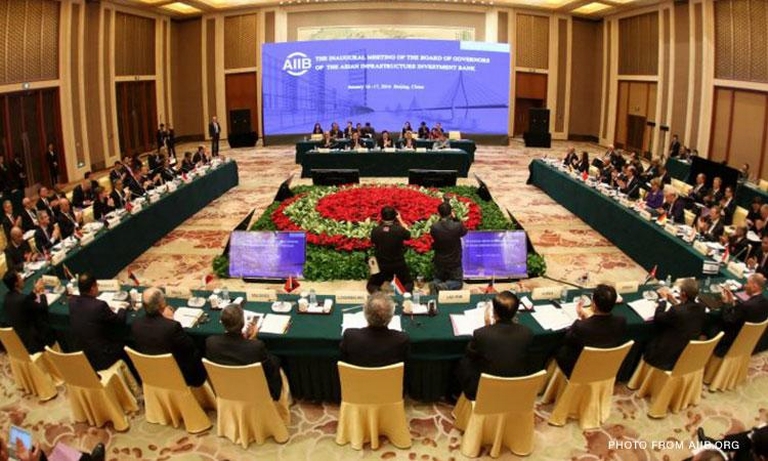
The AIIB is an initiative of the Chinese government, with the aim of helping develop Asia by funding infrastructure. It was created in 2013 and is headquartered in Beijing. It already has 57 founding members, including the Philippines.
The Bank is financing eight projects to date, including a dam in Indonesia, a gas pipeline in Azerbaijan, and a railway in Oman.